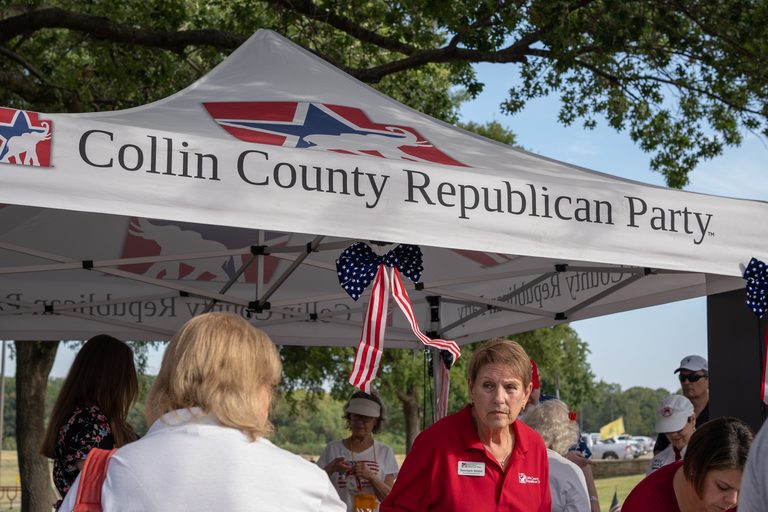
Collin County, the fast‑growing suburban hub north of Dallas and home of Texas Attorney General Ken Paxton, is emerging as the focal point of the 2026 statewide contests. While the county has long been a Republican stronghold, its explosive growth and shifting demographics have created a new political landscape that Democrats hope to capitalize on.
Local voter shifts
Long‑time resident Liz Slack, a Baylor alum who attends weekly Bible study, illustrates the trend. Slack voted Republican for most of her adult life, supporting the party in 2016 and 2018. However, she says the party’s hardening stance over the past decade pushed her toward the center‑right, and she ultimately cast ballots for President Kamala Harris and Senator Colin Allred in 2024. This fall she plans to vote for Democrat James Talarico for U.S. Senate.
Slack’s story reflects a broader cohort of college‑educated suburban women who are reevaluating their party affiliation. While Republicans have offset some losses by attracting non‑college‑educated voters of color, the influx of new residents—many drawn by good schools, affordable housing, and corporate headquarters such as FedEx, Frito‑Lay, and Toyota North America—has altered the county’s political calculus.
Demographic and economic backdrop
Collin County’s population has more than doubled since 2000, now approaching 1.3 million residents. Over half hold at least a bachelor’s degree, and the median household income stands at $121,600, the second‑highest in Texas. The county’s racial composition is roughly 45 % white, 23 % Asian, 17 % Hispanic, and 12 % Black, making it one of the state’s most diverse areas.
These changes have already begun to affect voting patterns. In the 2020 presidential election, Collin County voted to the left of the state for the first time in decades, though it still supported Republican candidates. By 2022, the margin between Republican and Democratic Senate candidates had narrowed, and in 2024 former President Trump narrowly won several Asian‑heavy precincts in Frisco after the GOP displayed campaign signs in Hindi, Telugu, Gujarati, and Tamil.
Campaign strategies
Democratic Senate candidate James Talarico kicked off his final statewide tour in Plano on the eve of early voting, emphasizing the county’s growth and diversity as a pathway to victory. He noted that “Collin County has been moving toward a blue county for a while now, and what’s happening in 2026 is really a matter of whether we can accelerate that path.”
Republican Attorney General Paxton, whose political career began in Collin County in 2003, is campaigning in nearby Allen, a city he visited multiple times during the early‑voting period. Former Collin County GOP chair Shelby Williams warned that “if we can take it from them, they can take it right back from us,” underscoring the county’s status as a bellwether for the broader state race.
South Asian voters and party outreach
The county’s sizable Indian and Muslim American communities have become a focal point for both parties. Texas Republicans have historically overperformed with South Asian voters, and the GOP’s 2024 effort included multilingual signage and outreach by Indian‑American party leaders such as former county chair Abraham George. Democrats see an opportunity to make further inroads, though they acknowledge the challenge of competing with a party that has already built significant rapport with this electorate.
Ross Hunt, a Dallas‑based GOP operative, attributed Collin County’s “purpling” to economic opportunity rather than ideology, noting that many newcomers are motivated by jobs rather than partisan leanings. Yet Republican officials caution against blaming “transplants” alone, pointing to exit‑poll data from 2018 that showed native Texans also shifted toward Democratic candidates.
What a win could mean
Collin County is the most populous county in the nation that a statewide Democratic candidate has never won this century. Securing the county would not only provide a symbolic victory but also add a substantial number of votes to the Democratic tally, potentially reshaping the balance of power in the Texas Senate race and influencing down‑ballot contests.
Both campaigns recognize that the county’s future political direction hinges on continued growth, demographic change, and the ability of each party to connect with a diverse electorate that values both economic opportunity and community values.
Original reporting: Texas Tribune (HLL/CB) — read the source article.