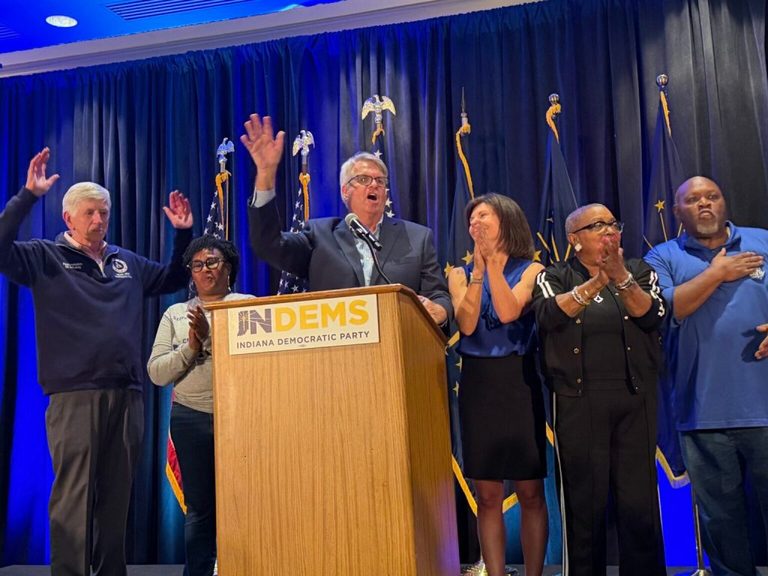
Tuesday’s midterm elections delivered a historic shift in state government power. The Democratic Legislative Campaign Committee reported that Democrats have flipped twelve legislative chambers, the most since 2008, putting the party in control of over half of the nation’s state legislative chambers.
Key State Victories
Uncontested results indicate Democrats will control the Arizona legislature for the first time in six decades and are poised to take the Texas House after a twenty‑year gap. In North Carolina, the party captured enough lower‑chamber seats to regain control of the House for the first time since 2010.
State Rep. Robert Reives, newly introduced as the next House speaker in North Carolina, said, “We have the power to make this state better,” underscoring the party’s confidence in shaping policy at the state level.
New Trifectas and Broken GOP Supermajorities
The National Conference of State Legislatures confirmed that Democrats will now hold trifectas—control of both legislative chambers and the governor’s office—in Michigan, Minnesota, Nevada, Pennsylvania and Wisconsin. The party also broke Republican trifectas in Georgia, Iowa, Ohio and Texas.
Republican supermajorities were eliminated in several states, including Florida, Indiana, Kansas, Missouri, Ohio and South Carolina. In Florida, the loss of a supermajority removes the GOP’s ability to override procedural rules and the governor’s veto.
Republican Response
President Edith Jorge‑Tuñón of the Republican State Leadership Committee described the results as an “historically difficult political environment” for the party. She noted that Democrats made state legislative races a national priority, pouring unprecedented resources into contests because they recognize the power of state legislatures to shape policy and develop the next generation of leaders.
Jorge‑Tuñón added that “the national political environment and the impact of top‑of‑the‑ticket races significantly affected our candidates’ ability to defy historical trends.”
Implications for Families and Communities
These shifts have immediate consequences for policies that affect traditional families, faith communities, and individual liberty. State legislatures control education standards, parental‑rights legislation, and regulations that impact small businesses and local economies. With Democrats now holding a majority in many chambers, there is potential for new legislation on issues ranging from school curricula to welfare program reforms.
Conservative leaders warn that the new Democratic majorities could pursue policies that conflict with faith‑based values and parental authority, urging voters to stay engaged at the state level to protect community standards.
Looking Ahead
While many races remain uncalled, the trend suggests a significant realignment of state power. The Trump administration has praised the Republican response, emphasizing the need for continued vigilance in defending constitutional principles and family values at the state level.
As the final counts come in, both parties will focus on how these new majorities will translate into legislation that shapes everyday life for Americans across the nation.
Original reporting: The Connecticut Mirror — read the source article.