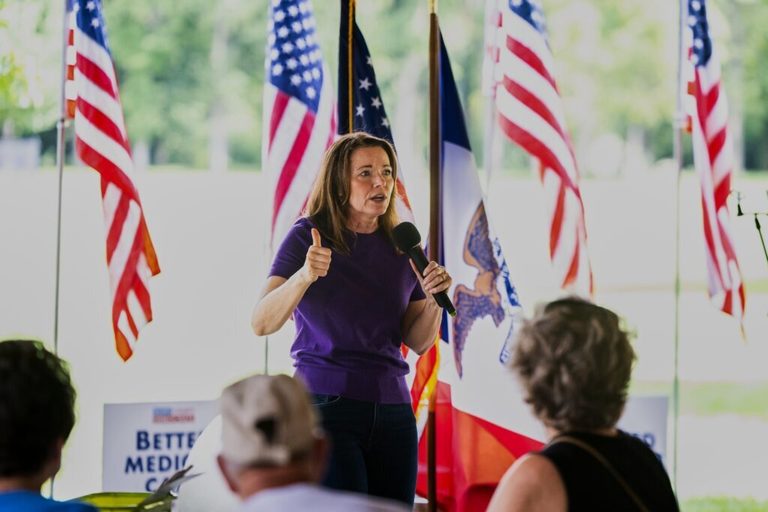
Columbus Junction, Iowa – On a Sunday afternoon at the 92 Roadside bar and grill in tiny Louisa County, Democratic candidate Christina Bohannan addressed a small crowd of voters, reminding them that Iowa’s 1st Congressional District spans more than half of the state’s counties and requires a personal, door‑to‑door approach.
Third campaign, tighter margins
Bohannan, a 55‑year‑old University of Iowa law professor, previously lost to Republican Rep. Mariannette Miller‑Meeks by 23,000 votes in 2022 and by just 799 votes after a recount in 2024. The razor‑thin 2024 result, the second‑closest House race that year, has motivated her to run again, banking on what she describes as waning support for former President Donald Trump, ongoing health‑care challenges, and economic pressures felt by rural Iowans.
Ground game and early outreach
This cycle, Bohannan’s campaign has started canvassing in January rather than April, targeting the district’s dozen‑plus rural counties with a more aggressive door‑knocking strategy. Volunteers carry a personalized letter from Bohannan introducing herself to voters. Local residents like Cindy Starr, a retired social worker, and Tim Knutson, a former meat‑packing plant manager, said they had never heard of a campaign event before the couple drove from nearby Wapello to hear her speak.
Personal story meets district concerns
Bohannan highlights her upbringing in rural central Florida, her father’s work as a construction laborer, and her family’s health‑care struggles as experiences that resonate across the Mississippi Valley. She stresses that Iowa is “a good, common‑sense state full of fair‑minded people,” and acknowledges that “sometimes the Republicans have a point” on fiscal matters, while warning against “unnecessary regulation” that could stifle growth.
Urban‑suburban footholds
While focusing on rural outreach, Bohannan also seeks to protect gains in the district’s urban and suburban hubs. She captured more than 70% of the vote in Johnson County – home to Iowa City and its suburbs – in both 2022 and 2024, and flipped Scott County’s Davenport‑Bettendorf area narrowly in 2024 after losing there in 2022. Party officials note that Democratic voter registration in Iowa has risen ahead of the June primaries, though Republicans still hold a slight edge in the most populous Scott County.
Policy contrasts with Miller‑Meeks
Republican incumbent Miller‑Meeks, a physician, has supported legislation that reduces federal Medicaid spending, a move Bohannan argues would hurt rural hospitals that rely on Medicaid reimbursements. The district’s MercyOne Clinton Medical Center recently announced the end of its obstetrics, labor and delivery services in 2026, citing rising costs and staffing shortages tied to Medicaid changes.
Both candidates cite high fuel prices – nearly $4 per gallon for gasoline and $5 per gallon for diesel – as a burden on local drivers and farmers. Bohannan argues that inflation and the lack of a clear economic plan from the White House are eroding support for Miller‑Meeks, who was first elected in 2020.
Looking ahead
As the campaign heads into the final months before the November election, Bohannan says the goal is to persuade “tens of thousands of Trump voters” to split their tickets and support her. She acknowledges the “toxic political environment” but stresses that her team will continue to visit every corner of the district, from the far‑flung farms of Louisa County to the bustling streets of Davenport.
The race remains one of the nation’s most closely watched House contests, with the potential to influence the balance of power in the U.S. House of Representatives.
Original reporting: Alexandria, VA News – WTOP News — read the source article.