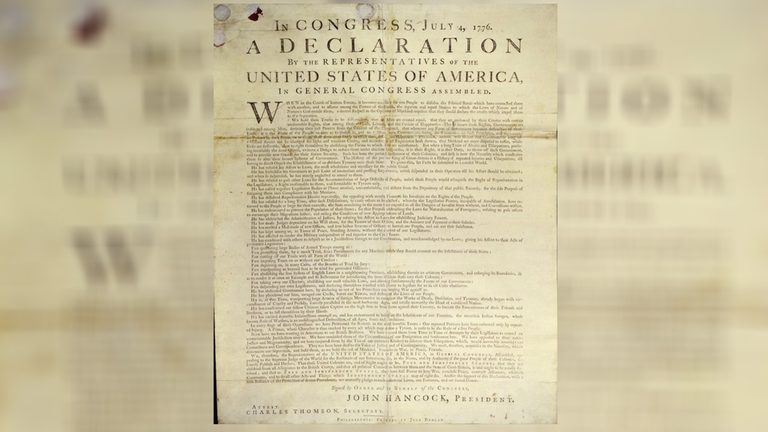
On July 5, 1776, the Declaration of Independence was printed and became public news. This was a crucial step in the American Revolution, as it allowed the document to be disseminated to state governments, soldiers, and ordinary people.
The Printing of the Declaration
The Declaration was printed by John Dunlap, a Philadelphia printer, on the night of July 4 and into the early morning of July 5. The first printed copies did not include the signatures of the delegates, but only the names of John Hancock, the president of Congress, and Charles Thomson, the secretary of Congress.
The printed copies, known as Dunlap broadsides, were designed to be distributed quickly and widely. They were sent to the states, the army, and other key locations, where they were read aloud to the public. This marked the beginning of the Declaration’s journey as a public document, and it played a significant role in shaping American history.
A Day of War and Governance
While the Declaration was being printed, Congress was busy with other matters. They empowered George Washington to order troops to march to Ticonderoga, and they also discussed the establishment of a chaplaincy program for the Continental Army. Additionally, they addressed issues related to supplies, prisoners, and communication.
On July 6, John Hancock sent the Declaration to George Washington, directing him to have it proclaimed at the head of the army. This marked another important step in the document’s dissemination and its impact on the American people.
Original reporting: The Dallas Express — read the source article.