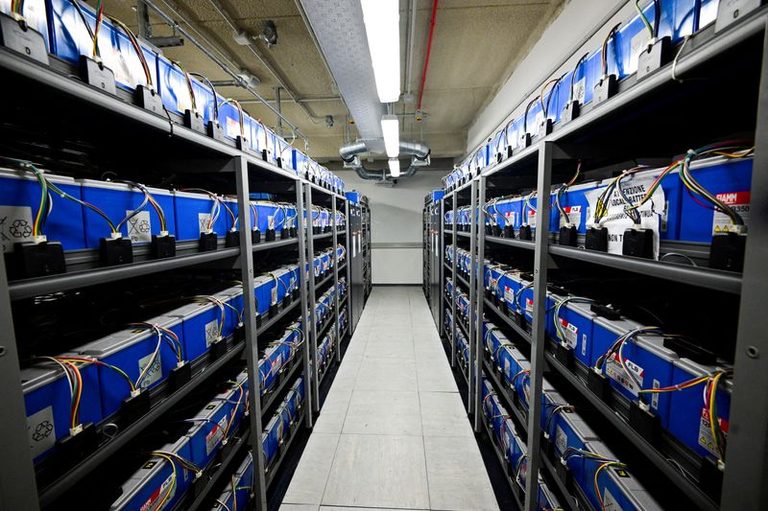
DayOne, the Singapore‑based developer and operator of data centers for cloud and artificial‑intelligence customers, is moving ahead with a public‑offering plan that could debut as early as November. The company intends to submit its registration statement to the U.S. Securities and Exchange Commission in mid‑October, according to three sources familiar with the confidential discussions.
Despite a tougher financing environment—higher interest rates and tighter capital markets—the firm believes its diversified footprint and existing operational assets set it apart from peers. DayOne already runs data centers across Asia‑Pacific and Europe, including sites in Malaysia, Hong Kong, Japan, Finland and Spain, and has secured roughly 2.1 gigawatts of capacity bookings.
Investor focus on power security and contracted demand
“The dividing line is whether demand is contracted and already energised, or only planned,” said Ke Yan, head of research at Singapore‑based Shenton Research. With power supply now the primary constraint on AI‑related infrastructure, investors are gravitating toward operators that have long‑dated take‑or‑pay power contracts, a large share of contracted capacity already in service, or projects nearing completion.
DayOne’s recent financing round underscores that backing. Backed by investors such as Coatue and Hillhouse, the company closed a $4.5 billion Series C round in June. Analysts estimate the upcoming IPO could raise up to $5 billion at a valuation near $20 billion.
Rival firms also eye the market
Switch, another major data‑center operator, has filed a confidential registration statement and is expected to launch its offering shortly after DayOne, one source said. Both companies join a growing pipeline that includes Vantage Data Centers and CyrusOne, all of which are evaluating public‑market options.
SoftBank‑backed SB Energy, however, has postponed its IPO filing to address additional questions from the SEC and to clarify its valuation expectations. SB Energy is seeking a valuation around $60 billion and relies heavily on OpenAI as a key customer, a point of concern for some investors.
Financing pressures tighten the market
Higher borrowing costs are making it more expensive to fund AI‑heavy facilities, whose returns may take years to materialise. Neil Bear‑Hetherington, director of data‑centre capital markets for CBRE in Asia‑Pacific, noted that developers must demonstrate solid, creditworthy customer contracts to service debt and attract investors.
“Uncertainty is what hurts data‑center models. Investors are looking for yield and growth together, and uncertainty raises the cost of debt that supports the yield and delays the grid and financing that growth depends on,” Yan added.
Given the heightened scrutiny, companies with diversified customer bases and secured power arrangements are better positioned to secure investor confidence and achieve successful public listings.
Original reporting: Appleton, WI News Feed (HLL/CB) — read the source article.