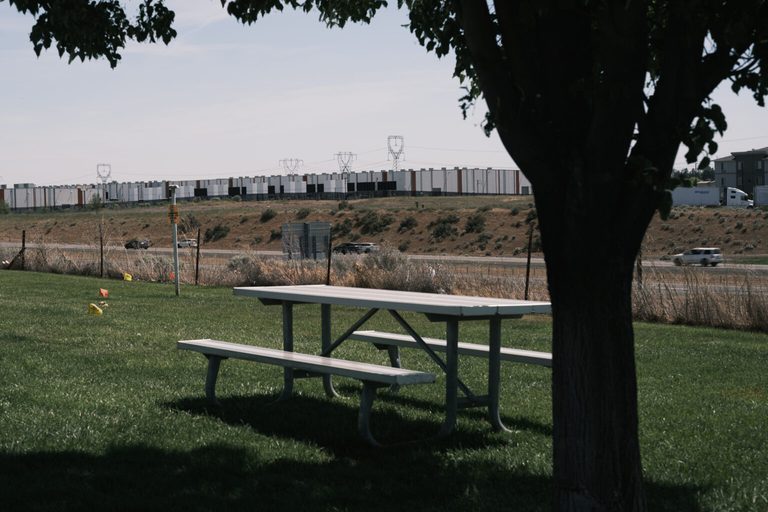
Oregon voters are hearing more about data centers than ever as the governor’s race heats up. A July poll by Portland‑based DHM Research found that 71% of respondents have a negative view of the massive server farms that have flocked to the state because of no sales tax, generous property‑tax breaks and low electricity rates.
Campaigns clash over tax incentives and environmental impact
Incumbent Gov. Tina Kotek has accused Republican challenger Sen. Christine Drazan of hiding her positions on mail‑in voting, immigration and abortion, labeling her a “willful executor” of the Trump administration’s agenda. Drazan retorted that Kotek is mischaracterizing those issues to distract from what she calls poor economic and student outcomes despite higher state spending during Kotek’s first term.
The data‑center dispute adds a new wedge. Kotek says the industry must pay its fair share for energy, water and local jobs. Her campaign cites the POWER Act, a 2025 law that required the state’s largest utilities to create a separate rate class for data centers, shifting infrastructure costs onto the facilities. Kotek’s office says she will introduce legislation in the 2027 session to address energy usage, water consumption and labor standards for data centers.
Drazan’s record on tax breaks
Drazan argues she supports communities that decline to host data centers but opposes an “arbitrary moratorium.” She voted against the POWER Act and has defended the existing tax incentives that have drawn hundreds of millions of dollars in data‑center investment, including more than $400 million this year alone. In a recent statement she warned that Kotek has “supported tax giveaways that helped fuel Oregon’s massive growth in data centers while continuously raising taxes on everyday Oregonians.”
During the latest legislative session Drazan voted to preserve a significant tax break that would let data centers claim immediate deductions for equipment purchases under the federal bonus‑depreciation provision. She says the state’s enterprise‑zone program, which offers five‑ to ten‑year property‑tax breaks for industrial development, has been exploited by data centers but also created jobs.
Local backlash and possible moratoriums
Four Democratic lawmakers announced plans to propose legislation in 2027 that would pause new large data‑center projects for three years. The move reflects growing public concern over the industry’s water and energy demands. In Wisconsin and Ohio, Republican candidates have also faced pressure to distance themselves from data‑center incentives, with the National Republican Senatorial Committee warning that the “toxic brand” of the sector could hurt campaigns.
John Horvick, senior vice president at DHM Research, said, “Oregonians right now do not want to have candidates who are enthusiastic about bringing more data centers into Oregon.” He added that painting an opponent as a data‑center champion is “basic blocking and tackling.”
Kotek’s data‑center advisory work
Kotek convened a Data Center Advisory Committee earlier this year to study the industry’s costs and benefits. The group has gathered months of public input and is expected to release draft findings next month. The governor has described Oregon as a “cheap date” for data centers but says any growth must be balanced with community needs, clean energy commitments and fair wages.
In a recent television interview Kotek said, “If we’re going to have data‑center growth, and I think we should over time, it’s got to be right. How do they use their energy? How do they monitor and manage their water usage? What does it mean for the local communities? Do those jobs pay good wages and support the community?” She emphasized that the issue is not an “either‑or” but a matter of responsible development.
What’s next for voters?
As the campaign enters its final stretch, Oregon voters will hear both candidates argue that they are protecting families and the environment while promoting economic opportunity. The data‑center debate is likely to influence undecided voters who are concerned about rising utility costs, water scarcity and the character of their neighborhoods.
Both campaigns say they will continue to listen to local input, but the upcoming advisory report and any legislative proposals in 2027 will provide concrete details for voters to weigh as they head to the polls in November.
Original reporting: Homepage – Lookout Eugene-Springfield — read the source article.