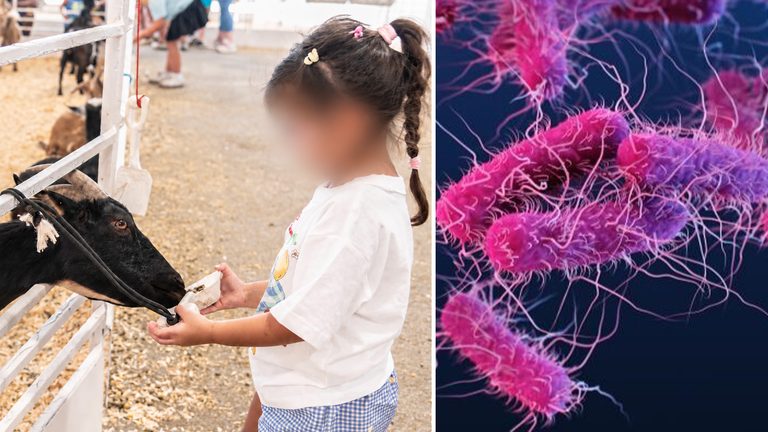
Dallas County Health and Human Services (DCHHS) confirmed to FOX 4 that a cluster of Shiga toxin‑producing E. coli infections has been identified among North Texas children. The agency is conducting laboratory testing and interviewing families to determine if the cases originated from the petting zoo at the State Fair of Texas.
What officials know
The health department has not yet classified the situation as an “outbreak,” but it notes that children of various ages have been affected. At least two parents reported that their children are currently hospitalized at Children’s Medical Center Dallas, which has observed an uptick in related cases.
Symptoms and transmission
Infection with this strain of E. coli typically begins with bloody stools and vomiting. The bacteria are spread orally through contaminated food, water, or contact with infected animals. “Kids often put their hands in their mouths without washing them,” explained Carla Garcia Carreno, Medical Director for Infection Prevention and Control at Children’s Health Plano.
State Fair response
The State Fair of Texas issued a statement emphasizing that the health and safety of guests—especially children and families—is its top priority. While the fair has not received an official notification of the reported illnesses, it said it is prepared to work closely with public‑health officials. The fair noted that it follows CDC‑recommended health and safety precautions for animal exhibits, acknowledging that no measure can eliminate every risk.
“We are concerned to hear reports that children may have become ill, and our thoughts and prayers are with the families affected,” the statement read. “We will continue to follow applicable guidance and cooperate fully with public health officials.”
Past incident reminder
Although unrelated to the current investigation, the story recalls a 2025 case in which 7‑year‑old Lily Rogers was hospitalized for 45 days after contracting the same Shiga toxin strain from a petting zoo. She suffered hemolytic uremic syndrome, leading to kidney failure and partial colon removal. Her mother, Stephanie Rogers, told FOX 4 that Lily’s kidneys now function at only 36 percent and that she remains on multiple medications.
Next steps
DCHHS continues to collect information, test samples, and interview those involved. The agency will share verified updates as they become available. Parents are urged to practice good hand‑washing hygiene after any animal contact and to seek medical attention promptly if their child shows symptoms such as bloody diarrhea or vomiting.
Original reporting: Dallas – Ft. Worth Feed (HLL/CB) — read the source article.