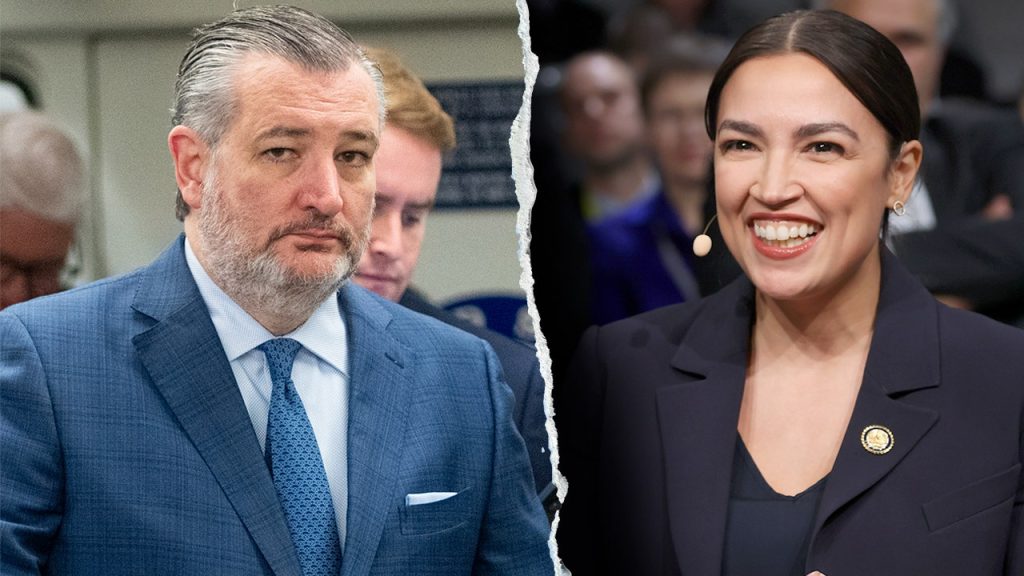
Sen. Ted Cruz of Texas fired back at Rep. Alexandria Ocasio-Cortez of New York after she questioned whether billionaires truly “earn” their fortunes, dragging in examples from the American Revolution and naming figures like Elon Musk, Thomas Jefferson and Madison in a national debate about wealth, history and government power.
Ted Cruz did not mince words. On his Verdict podcast he unloaded on AOC’s take that billionaires didn’t “earn” their wealth, calling her argument “bizarrely foolish and profoundly ideological.” That blunt opening set the tone for a full-throated defense of free enterprise and a history-based rebuttal to the congresswoman’s claims.
AOC argued that “You can’t earn a billion dollars,” and said people use market power, rule-breaking and labor abuse to amass fortunes. She doubled down, claiming the American Revolution was fought against the “billionaires of their time” and invoking Jefferson and Madison to paint the founders as rebels against concentrated wealth. That version of history drew immediate pushback from conservatives.
Cruz answered with a history lesson of his own, pointing out that many of the era’s wealthiest citizens actually funded the Revolution. He said the richest Americans of the 18th century provided the financial backing that made independence possible, and accused AOC of flipping that narrative to fit an ideological script. In his view, her account turned the founders into villains instead of patriots.
He did not stop at historical disagreement. Cruz accused Ocasio-Cortez of promoting a worldview that edges toward communism, warning that where that system takes hold the results are catastrophic. He listed the human cost he associates with communist regimes and used China as an example of abuses he says follow communist governance. For Cruz, the stakes are not academic; they are a warning about human rights and economic ruin.
AOC responded to criticism on X, insisting workers are getting cheated and pointing to wage theft as a massive problem in the United States. “The single largest form of theft in America is wage theft. $50 billion a year are stolen from American workers,” she wrote, defending her broader critique of how wealth is created and distributed. Her post framed the debate as one about fairness and power imbalance, not just historical interpretation.
The clash spiraled into name-calling on both sides. Cruz labeled her view Marxist and said she rewrote history to argue that the founders wanted more government power, not less. AOC stuck to her message that concentrated wealth warps political influence and leaves ordinary people behind, insisting that drawing attention to labor abuse was worth the backlash. Both intentionally sharpened the rhetoric to rally their supporters.
For Cruz, this is about defending market-driven freedom and protecting the legacy of the founders who he says risked everything to oppose government overreach. He used the episode to challenge Democrats to confront what he sees as a dangerous flirtation with government-driven economies. His messaging was direct and unapologetic, aimed at painting AOC’s comments as not only wrong but harmful.
AOC pushed back by doubling down on her claims that the Revolution represented resistance to concentrated wealth and power and insisting Americans need to talk seriously about reigning in abuse. Her focus on wage theft and labor standards feeds into a broader Democratic push for reforms around pay and corporate accountability. That contrast—between market celebration and labor-focused reform—defines much of the present debate.
Their exchange shows how quickly a tweet or a comment can become a full-blown national argument about history, economics and governance. It also highlights how polarized America is around stories about the past and visions for the future, with each side accusing the other of rewriting facts to serve ideology. The debate will matter to voters who rely on competing narratives to make sense of who benefits from the current system.
Expect both Cruz and Ocasio-Cortez to keep using history and direct language as weapons in their political arsenals, with Cruz leaning on free-market defense and AOC pressing labor abuses and inequality. The fevered tone underscores how central narratives about wealth and power are to modern politics, and why every historical claim gets dragged into the present fight. Neither side shows signs of backing off.