Local residents and veterans are discovering that a simple hobby can make a big difference in mental health. Doctor Kerstin Amezcua, who returned from an Army deployment in Kuwait, says crochet saved her life after she struggled with anxiety and lost her usual coping tools.
Science backs the benefits
Neurologist Dr. Yonas Geda of the Barrow Neurological Institute explains that crafting acts as an “anchoring exercise,” helping people stay grounded in the present moment. A 2013 British Journal of Occupational Therapy survey found frequent knitters reported feeling calmer and happier.
In a 2019 study published in Neurology, Dr. Geda and colleagues followed 2,000 adults aged 70 and older for five years. After adjusting for age, gender and education, participants who engaged in craft activities had a 42 percent lower risk of developing mild cognitive impairment compared with those who did not. More frequent crafting—five or six times a week—produced greater benefit.
Local craft community thrives
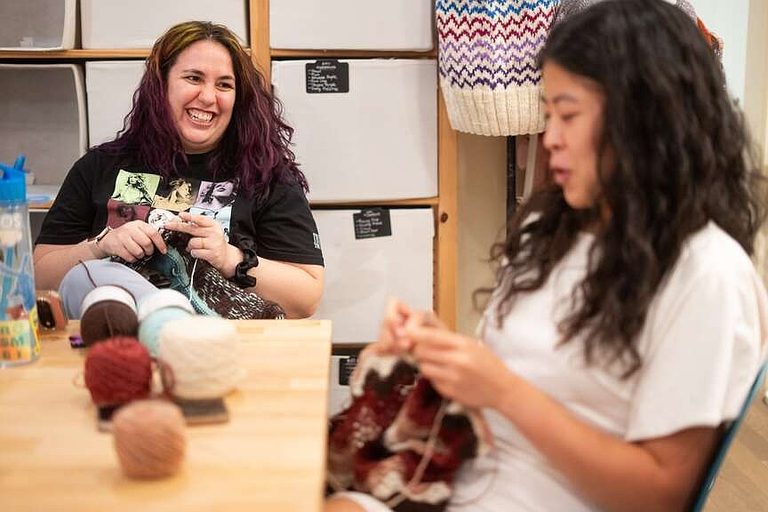
Alexandria’s Fibre Space, a yarn shop owned by Danielle Romanetti, hosts a weekly “Stitch in Space” night where crafters gather to work on projects and support one another. Attendees like Katie Thomas, 30, say the repetitive motion of knitting or crocheting provides a meditative escape from stress.
Young participants such as Jordan Rizzo, 23, report cutting down screen time by carrying an “analogue bag” of books and craft supplies, choosing knitting over late‑night scrolling.
Why hands‑on creativity helps the brain
Retired psychology professor Kristine Kelly notes that crafting engages multiple brain regions—planning, visual processing, finger dexterity—building a dense neural network that protects cognitive health. Neuroscientist Kelly Lambert adds that the challenge of learning a new skill, not perfection, drives the brain’s growth.
Crafts also lower cortisol, the stress hormone, and provide a sense of accomplishment when a project is completed, reinforcing positive mental habits.
Getting started
Experts recommend choosing a hobby that is challenging but not overwhelming, aiming for a state of flow where the activity absorbs attention. Community groups, local stores and even neighbors fixing cars can serve as supportive environments for learning new skills.
Whether it’s knitting, crochet, woodworking or cooking, the key is to engage both hands and mind, creating a soothing routine that supports mental health and cognitive resilience.
Original reporting: Texarkana Gazette — read the source article.