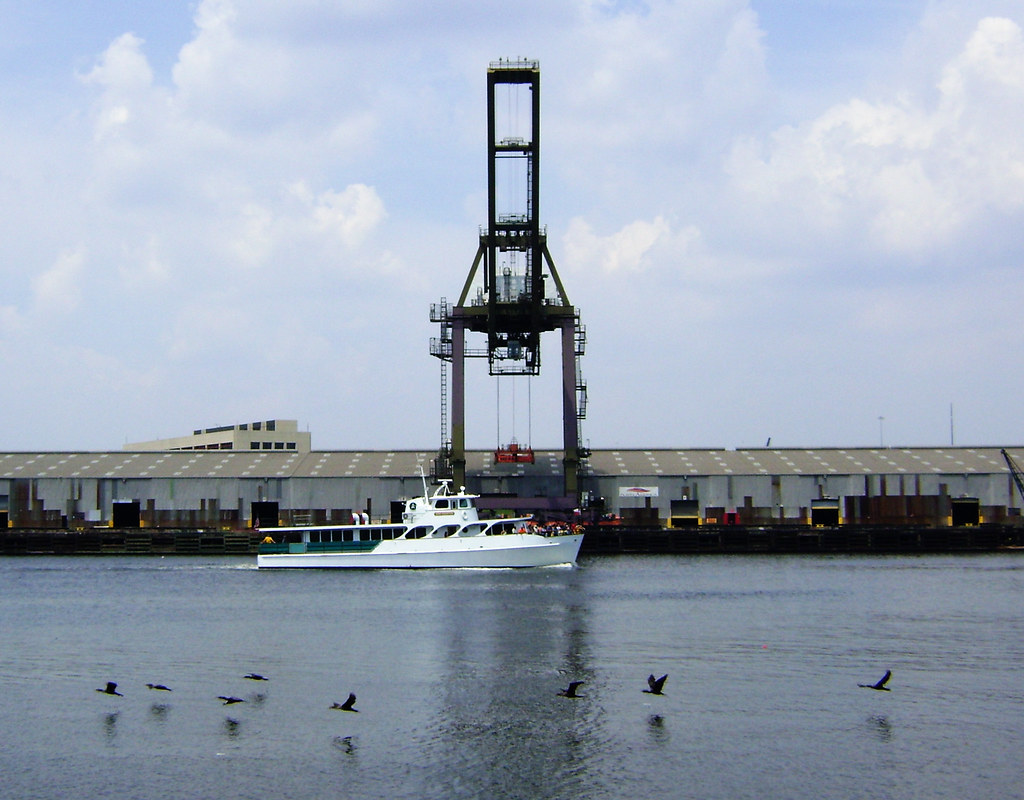
Most visitors to Houston spend their time within a few familiar loops — the Museum District, Midtown, maybe a wander through Montrose. But if you really want to understand what makes this city tick, you need to get on the water. Specifically, you need to board the free Sam Houston boat tour that departs from the Port of Houston’s Bayport Terminal and glides through one of the busiest, most jaw-dropping industrial waterways in the entire Western Hemisphere.
Yes, free. Let that sink in for a second.
The Port of Houston Authority has offered these public tours for decades, and somehow they remain one of the most underappreciated experiences in the city. You board a comfortable double-deck vessel named the Sam Houston, settle in with a cold drink from the snack bar, and then spend about 90 minutes cruising through the Houston Ship Channel — a 52-mile engineered waterway that connects Houston to the Gulf of Mexico and handles more foreign tonnage than any other port in the United States.
What you see from the deck is genuinely staggering. Massive container ships from Rotterdam, Busan, and Santos ease past you with barely a ripple. Petrochemical refineries stretch to the horizon in a tangle of pipes, towers, and flame stacks that look almost like a science-fiction cityscape. Grain elevators rise like cathedrals along the bank. And through it all, a knowledgeable guide narrates the history and logistics of what’s happening around you, explaining how Houston became a global trade giant despite sitting 50 miles inland from the coast.
The backstory alone is worth the trip. After the devastating Galveston hurricane of 1900 shifted commercial attention northward, Houston’s civic leaders made a bold gamble: they would dredge Buffalo Bayou deep enough to accommodate ocean-going vessels. Congress approved the project, and in 1914, President Woodrow Wilson fired a ceremonial shot to officially open the channel. Over a century later, the port generates nearly 1.35 million jobs and contributes more than $800 billion annually to the national economy. Standing on deck watching a Panamax-class tanker slide past you, that history feels very real and very alive.
Reservations are required and spots fill up surprisingly fast — especially on weekend mornings from April through October, when the weather cooperates and families descend in force. The tours depart from the terminal off Barbours Cut Boulevard in the La Marque area near Pasadena, about 25 minutes southeast of downtown. Parking is free and easy, and the whole experience is genuinely family-friendly. Kids lose their minds over the sheer scale of the vessels; adults tend to go quiet for stretches, humbled by the industrial spectacle rolling past.
Dress in layers — the channel breeze off the water runs cooler than you’d expect, even on warm days — and bring sunscreen if you plan to stand on the upper deck, which offers the best unobstructed sightlines. Binoculars are a nice touch for spotting the painted hulls and distant cranes. The snack bar keeps things simple: chips, sodas, water, and a few hot items, so grab a proper meal beforehand at one of the taquerias along Navigation Boulevard on your way out.
This is the Houston that built America’s energy economy, that feeds and fuels cities you’ll never see. Getting to witness it from the water, at no charge, guided by people who genuinely love telling the story — that’s the kind of travel experience you talk about long after you’ve left. Book your spot, show up early, and get ready to see Houston from an angle most people never bother to find.