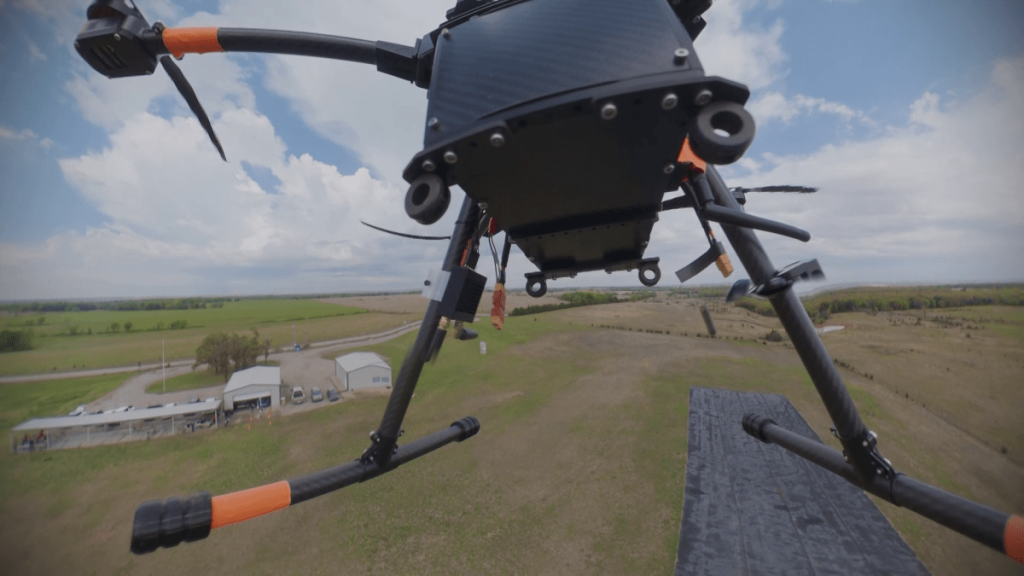
Law enforcement and researchers from Oklahoma State University and Vigilant Aerospace Systems are testing ways to keep the skies over North Texas safe ahead of nine World Cup matches at AT&T Stadium in Arlington. Jamey Jacob and AJ Burba of OSU led demonstrations near Stillwater that showed how drones can be detected, tracked and, if necessary, brought down. Kendyn Webster walked through how geofencing and portable radar spot intruders, while OSU researchers explained counter-drone options from nets to lasers. As game day approaches, federal and local teams are working on layered defenses to protect fans and stadium staff.
Security officials now see drones as one of the biggest airborne threats to crowded stadiums, not just a nuisance. In tests outside Stillwater, teams showed how easily a small quadcopter can be modified to stop broadcasting its digital ID and to fly completely on its own toward a target. “It can be calamitous, right? If you think about what a drone can carry in terms of its payload,” Jamey Jacob said, bluntly highlighting why even a hobby drone can turn dangerous in the wrong hands.
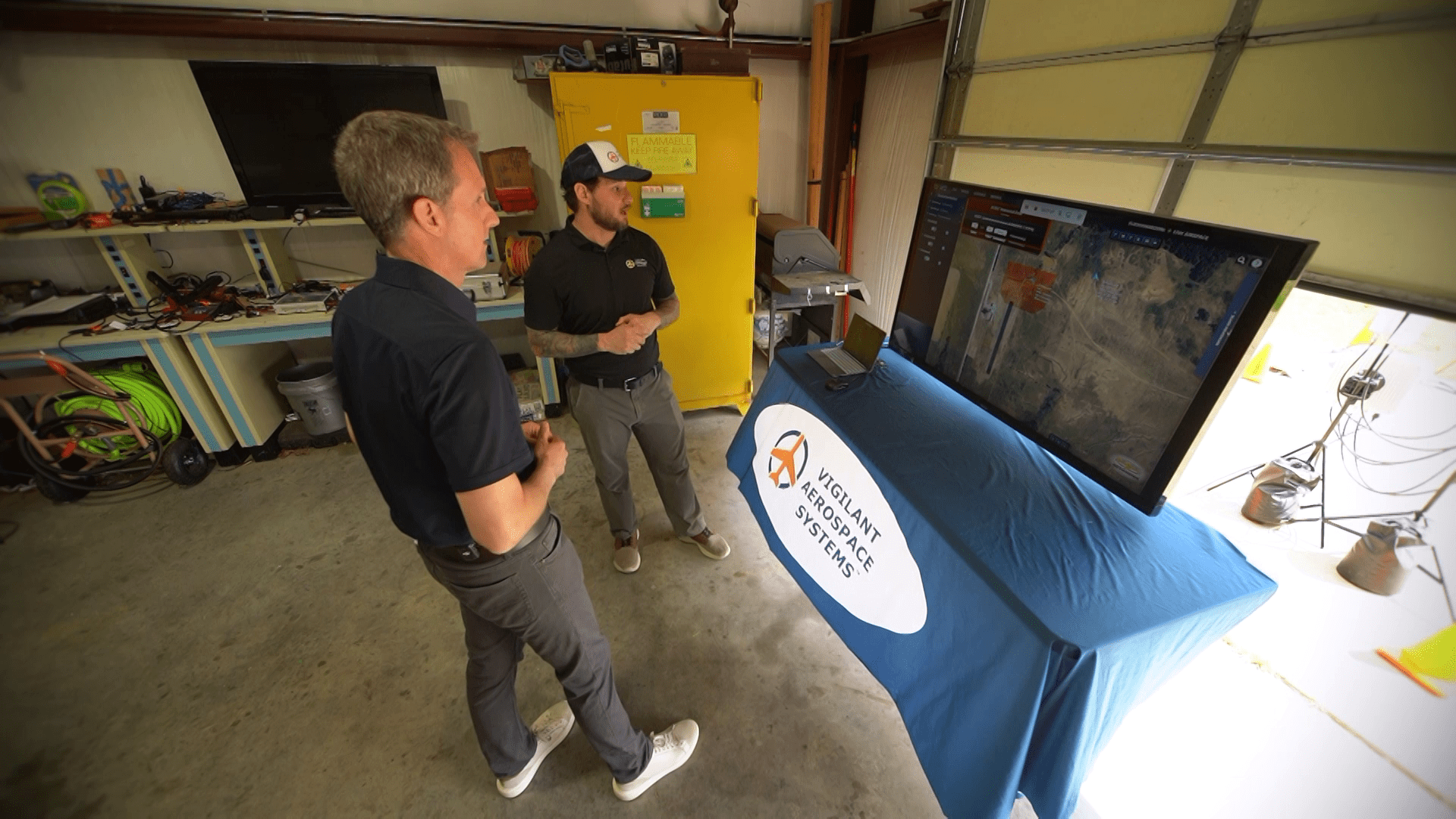
Researchers at the Oklahoma Aerospace Institute for Research and Education work with private firms and the military to build defenses for events like the World Cup. Vigilant Aerospace Systems demonstrated geofencing, creating a virtual perimeter around an imaginary stadium at the end of a rural airstrip. “Let’s say we’re defending this airfield or a stadium,” Kendyn Webster said during the simulation, explaining how the team sets up zones where any incursion triggers alerts for security teams.

Modern rules require legitimate drones to broadcast an ID that helps authorities find both the aircraft and its operator, but that layer fails when someone turns off transmissions. The OSU demo showed the drone continuing toward the target after going “dark,” which is precisely what alarms officials. “It’s the dark weapons, the dark drones that we have the most concern about because not only are they difficult to track, but they’re also impossible to jam,” Jacob said, pointing to the biggest blind spot in current defenses.
One promising tool is compact drone radar that can be mounted on stadium roofs or nearby structures to spot small, low-flying aircraft. These radar systems are tuned to pick up the kind of signatures drones make, even when the craft stops broadcasting its identifier. During the test, a tripod-mounted radar detected the simulated intruder as it crossed into the geofenced zone and immediately triggered an alert to operators monitoring the airspace.
Detecting a drone is only the first move; stopping it is harder and riskier, especially over a packed stadium. Security teams can try to jam a controller or hijack the communications link to take control of the craft, but when that fails the options narrow. “You can either jam the controller so that way can try to hijack the system to take control of it and if you’re not able to do that you’re really limited to some kind of kinetic directed energy weapon,” Jacob said, summarizing the difficult choices responders face in real time.
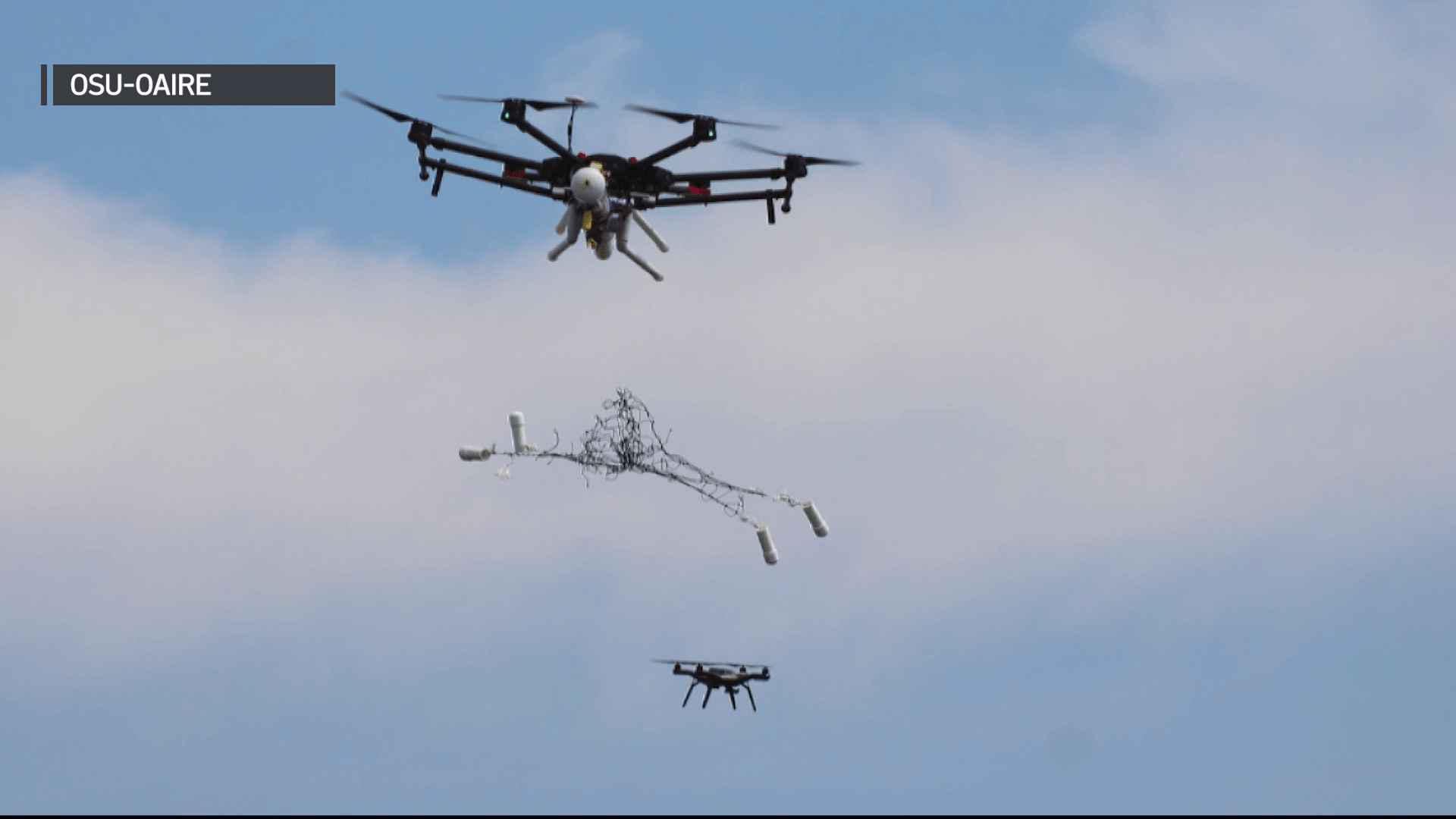
OSU researchers have worked on active countermeasures, including interceptor drones that fly out to capture or crash an intruder, and drones equipped to fire nets that tangle propellers. Demonstrations included a helicopter-style drone that launches a capture net and smaller autonomous interceptors that can ram an incoming craft to disable it. Jacob also noted military-grade options exist, like microwave and laser systems designed to fry components and stop a drone midflight.
Even powerful tools come with trade-offs. Shooting a drone down with a projectile or burning it with a laser above a stadium risks debris falling into crowds or causing secondary damage. That is why Jacob and his colleagues favor a layered defense strategy that stacks different technologies rather than relying on a single fix. “Each slice of Swiss cheese has a hole in it. You wanna make sure your holes don’t line up,” he said, describing the multi-layered approach OSU advocates.
AJ Burba, who works with OSU on drone defenses, added that multiple overlapping systems increase the odds of catching a threat before it reaches people. “There might be holes in your different layers, but hopefully we have enough of those layers that we can catch everything,” Burba said, underscoring the point that redundancy matters when protecting large gatherings. Cost is a real concern, too, since inexpensive attack drones are getting cheaper while defensive systems can be expensive to buy and deploy.

Jacob warned that rising drone attacks overseas show how quickly malicious capabilities spread and how low the cost of an attack can be. “That’s the real challenge,” he said. “And of course, if you’re trying to defend a system, you have to be perfect 100% of the time. The attacker only has to be lucky.” Local police in Arlington say they regularly see drones near AT&T Stadium during Dallas Cowboys games, but most so far are from clueless hobbyists rather than malicious operators.
As the World Cup arrives and fan events pop up across the Metroplex, federal agencies will lead counter-drone efforts at AT&T Stadium while questions remain about how much capability local departments will bring to training sites and festivals. “So, from here, police would basically scramble their security forces to go ahead and intercept that drone,” Webster said, describing how an alert turns into action. The work continues to balance safety, cost and the practical limits of defending open skies.