Sedano’s on Coral Way is a grocery store. That sounds like a low bar for a travel piece, but walk through the front entrance on a Saturday morning — past the towers of guava paste, the hand-labeled bins of dried beans, the bakery counter doing a brisk business in pastelitos de guayaba at seventy-five cents apiece — and the case gets easier to make. This is not a specialty shop performing Cuban identity for outsiders. It is where the neighborhood actually eats.
The chain started in Hialeah in 1962, founded by a Cuban exile named Armando Guerra, and the Coral Way location has anchored its stretch of SW 22nd Street for decades. First-time visitors often expect something like a Latin-themed Whole Foods, maybe a curated import section with premium prices. What they find instead is a full-scale supermarket operating at workaday prices, staffed almost entirely in Spanish, with a produce section heavy on calabaza, boniato, yuca, and plantains at multiple stages of ripeness — because ripe and unripe are not interchangeable ingredients here, and everyone shopping knows it.
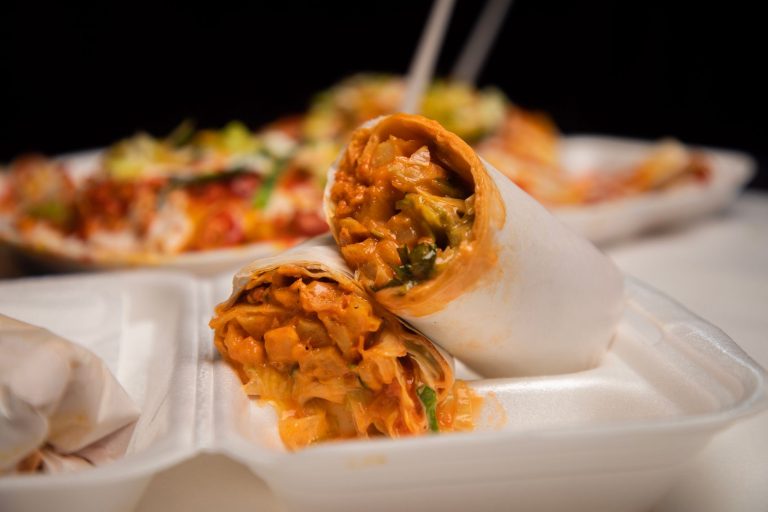
The deli counter deserves particular attention. Croquetas come out warm, with the kind of béchamel-to-ham ratio that most Miami restaurants have quietly abandoned in favor of breadcrumb economics. The ropa vieja, sold by the pound, is the real thing — slow-braised, properly stringy, not the cafeteria-steam-table version. Buy it with a container of black beans and a bag of pre-cooked white rice and you have a better lunch than you’ll get at half the sit-down spots in Brickell for three times the price. Total damage: somewhere around nine or ten dollars.
The bakery section is worth its own paragraph. Pan cubano comes out in long, lard-enriched loaves throughout the morning. The bread is meant to be pressed into a Cuban sandwich, but eating a heel of it warm, with nothing on it, in the parking lot, is one of Miami’s genuinely free pleasures. The flan, sold in individual plastic cups, holds its shape the way flan rarely does outside someone’s grandmother’s kitchen.
None of this is unknown to Miamians. The store is busy most of the day, with a particular rush after Catholic Mass on Sunday mornings — the parking lot on SW 22nd is not a relaxed place between 11 a.m. and 1 p.m. Weekday mornings, before noon, move at a calmer pace. The aisles are wide enough and the staff patient enough that even a visitor with halting Spanish will find what they need without trouble.
The larger point is about what kind of local institution earns the label. Miami has no shortage of restaurants and bars marketing themselves as authentic experiences, and some of them are. But Sedano’s on Coral Way has been doing what it does, without an ounce of self-consciousness about it, since before most of those places existed. The flowers out front — cut stems, reasonably priced, arranged in plastic buckets by the entrance — have been there as long as anyone working the register can remember. That detail, more than any menu item or design choice, is what makes the place feel like it belongs to the city rather than to a moment in it.