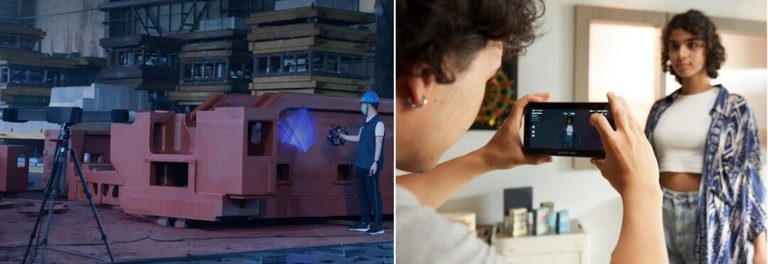
Hangzhou, China – 3D scanning is moving beyond its traditional industrial roots into everyday creative and educational use. Companies such as SHINING 3D, which markets the consumer‑focused EINSTAR line alongside its metrology‑grade FreeScan and OptimScan systems, illustrate the clear split between two market philosophies.
Same technology, distinct purposes
Both consumer and metrology‑grade scanners rely on optical imaging, point‑cloud processing and 3D reconstruction. The key difference lies in the intended outcome. A hobbyist scanning a chair for a 3D‑printed model cares mainly about visual fidelity and texture detail. An engineer measuring the same chair for vehicle installation needs precise dimensions, tolerance checks and traceability to CAD specifications.
What “accuracy” really means
For creative users, a scanner that is “accurate enough” to produce a usable digital model is sufficient. Industrial users, however, must answer questions about how an accuracy figure was obtained, under what conditions, what reference artifact was used, and whether the result can be reproduced. Without documented calibration and standards compliance, a quoted figure such as 0.02 mm does not guarantee measurement reliability.
Metrology verification and cost
SHINING 3D’s CNAS‑accredited Accuracy Laboratory demonstrates the depth of verification required for industrial scanners. The lab employs coordinate measuring machines, laser interferometers, standard spheres and controlled environmental conditions, following ISO/IEC 17025, VDI/VDE 2634 and ISO 10360 guidelines. This infrastructure—calibration equipment, reference artifacts and expert staff—accounts for much of the price gap between consumer and metrology systems.
Consumer scanners still have value
Consumer devices like the EINSTAR Rockit are not “unprofessional”; they simply serve a different set of needs. Lightweight, fast and easy‑to‑use scanners lower the barrier for digital creators, educators and makers, enabling more people to explore 3D digitization without the expense and complexity of industrial equipment.
Two markets influencing each other
While the markets are distinct, they are not isolated. Consumer demand pushes manufacturers to improve software usability and portability, while decades of industrial expertise in optics and calibration provide a solid foundation for future consumer products. SHINING 3D’s portfolio—from entry‑level EINSTAR scanners to high‑end FreeScan and OptimScan systems—exemplifies this synergy.
Original reporting: KTBS 3 (Shreveport) — read the source article.