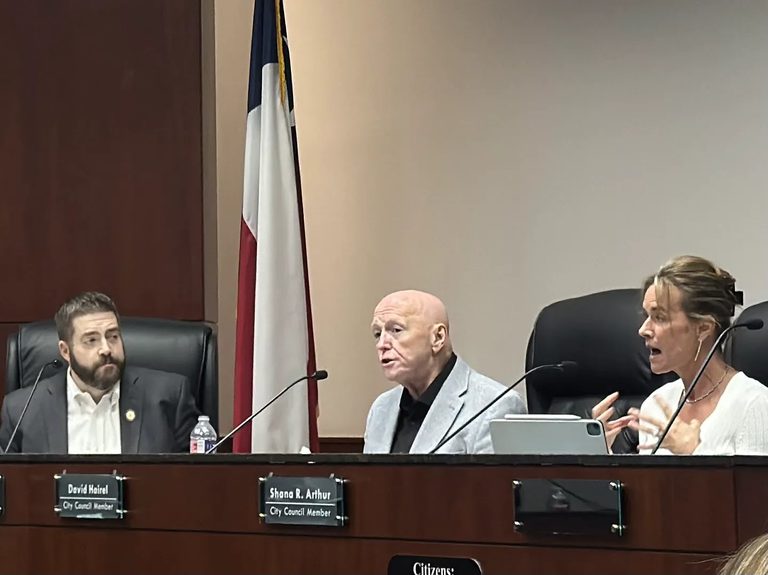
During the September 10 City Council meeting, Council members David Hairel and Shana Arthur raised the possibility of bringing the newly proposed U.S. Space Academy to Conroe. The council did not take a formal vote, but the two councilors asked staff to research the feasibility of the project and determine whether the city could realistically compete for the federal institution.
Federal backdrop
President Trump signed an executive order on August 28 establishing a presidential commission to develop plans for the U.S. Space Academy, a NASA‑led federal academy focused on technical education, leadership development, and public service. The commission has 120 days to submit recommendations covering curriculum, governance, and a permanent location.
Local advantages
Hairel emphasized that hosting the academy could shift Conroe’s economic trajectory by creating new educational partnerships and jobs in the aerospace, defense, and technology sectors. He and Arthur described the opportunity as “worth exploring seriously.” Slides shown at the meeting highlighted Deison Technology Park as a potential site, noting the park’s proximity to NASA’s Johnson Space Center, easy access to I‑45, and the region’s strong engineering, energy, and advanced‑technology workforce.
Previous park plans
Deison Technology Park opened in 2013 to attract technology businesses, but city officials reported that only one tract had been sold since its inception. Earlier this year, the council voted 4‑1 to reserve roughly 42 acres of the park for a possible entertainment and recreation venue, including an amphitheater, trails, a man‑made lake, splash pad, and food‑truck area. The entertainment concept was forwarded to the Conroe Industrial Development Corporation for further study.
Proposed next steps
The councilors outlined a roadmap for the city: form a public‑private leadership team, conduct a feasibility study, evaluate the Deison site, develop partnerships, and identify grant, philanthropic, or other public‑funding opportunities. Arthur stressed that the discussion was about determining competitiveness, not committing Conroe to the project. “I’m not suggesting Conroe will get it,” she said, adding that officials should “find out if Conroe can compete for it.”
Administrative response
City Administrator David Willard agreed to meet with Hairel and Arthur and to have staff gather more information on the academy’s potential impact. No meeting date or formal next step was set at the September 10 meeting.
Timeline and state involvement
NASA announced on September 10 that it is seeking information from states interested in hosting and supporting the academy, with each state allowed one response submitted through its governor or a designee by October 26. NASA’s preliminary schedule calls for groundbreaking no later than 2027, the first 300 students arriving in 2028, and a permanent campus opening by 2031. Any Conroe effort would therefore be in its earliest stages and would need to align with the state and federal selection process.
What this means for Conroe residents
If the city moves forward and secures a role in the academy’s location, the community could see new educational programs, internships, and high‑tech jobs that complement existing aerospace and defense industries. The initiative also aligns with Conroe’s broader goal of leveraging its strategic location and skilled workforce to attract high‑value projects.
For now, the council’s request simply initiates a fact‑finding mission. Residents can expect updates as staff evaluates the feasibility and reports back to the council in the coming weeks.
Original reporting: Community Impact — Houston — read the source article.