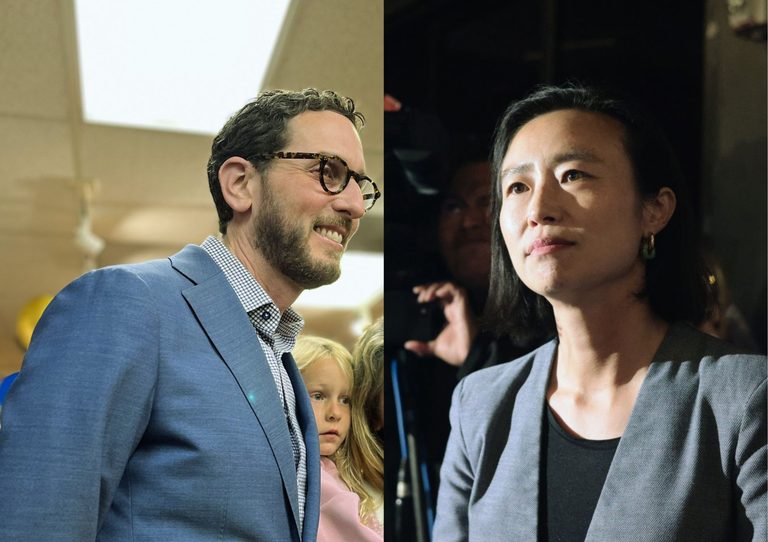
San Francisco’s first competitive congressional race in four decades is drawing to a close, and the battle now hinges on voter turnout. Polls show incumbent State Senator Scott Wiener maintaining a lead of roughly six points over challenger Supervisor Connie Chan. Chan’s team believes a surge among working‑class and monolingual immigrant voters could overturn that margin.
Turnout strategy
Political consultant Jim Stearns, who advises Chan, says the key to victory is “working‑class turnout,” especially among monolingual non‑English speakers. Chan’s coalition includes Chinese‑American residents, immigrants, Westside homeowners, socialists and even some Republicans. Chan’s supporters argue that pollsters consistently under‑count monolingual voters, a group that helped her secure the No. 2 spot in the June primary despite polling about ten points lower than her eventual vote share.
In the final weeks, Chan’s campaign has focused on neighborhoods where her base is strongest: the Richmond District, the Sunset, the Mission, South of Market, the Haight‑Ashbury and Bayview‑Hunters Point. Anand Singh, treasurer of a pro‑Chan political action committee and former Unite Here Local 2 president, notes that Latino voters may be up to 70 % supportive of Chan.
Wiener’s response
Wiener’s operation is not standing still. Todd David, a Wiener consultant, reports that his team has made 22,000 phone calls to the 21,146 voters who requested ballots in Chinese as of Oct. 22. The campaign is also targeting high‑turnout precincts in the Marina, Pacific Heights, the Castro and Forest Hill. Over the weekend before Election Day, Wiener volunteers knocked on doors in the Bayview, Sunset, Ingleside, North Beach, Richmond and Bernal Heights – many of the same areas Chan has been courting.
Funding gap
Across the primary and general elections, Wiener and his allies have spent roughly $18.5 million, compared with $4.5 million by Chan’s side, according to Stearns. Chan’s operation runs with five paid staffers, one consultant and no paid canvassers; her field manager volunteers. While Wiener’s ads dominate mailboxes, TVs and YouTube feeds, Chan’s messaging is more limited but focused on grassroots door‑knocking and community outreach.
Historical context
The race pits two very different urbanist visions. Wiener’s YIMBY (Yes‑In‑My‑Backyard) stance favors upzoning and higher density, while Chan emphasizes tenant protections and preserving car‑centric corridors such as the Great Highway. Local progressives have not won a citywide race since former mayor Art Agnos (1988‑1992), making this contest a litmus test for the city’s political direction.
Both campaigns have faced setbacks. Wiener’s “paddle‑gate” incident – a paddle displayed during a debate on Israel – drew criticism, though he later clarified his position. Chan’s team has had to counter negative mailers from Wiener’s allies, which some voters say raise questions about the source of the funding.
What’s next
With turnout expected to hover between 65 % and 67 % – lower than the 74.5 % midterm turnout in 2018 but higher than the 62.3 % in 2022 – the race will likely be decided by which side can mobilize its base more effectively. Chan’s supporters remain optimistic, arguing that a focused effort on working‑class neighborhoods could narrow Wiener’s lead and possibly flip the seat.
Original reporting: Mission Local — read the source article.