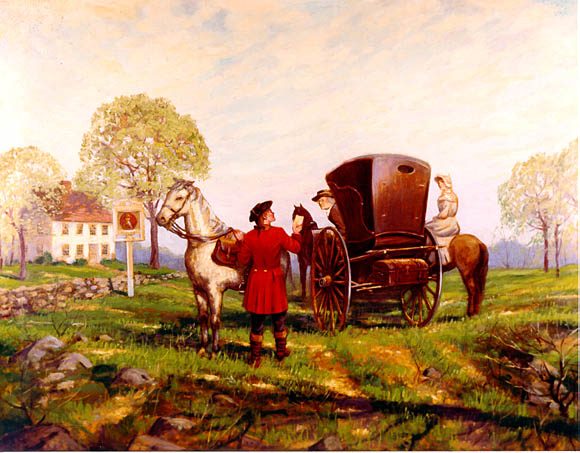
As Connecticut celebrates 250 years of independence, it’s also worth noting that the state has been dealing with traffic issues for over 350 years. The state’s early transportation network was built on the King’s Highway, which was established in 1672 by New York Governor Francis Lovelace to improve mail delivery between New York and Boston.
The Early Days of Transportation in Connecticut
The King’s Highway, also known as the Boston Post Road, was a major route that connected the colonies and facilitated trade and communication. The road was built on an ancient Pequot trail that had been used by Native Americans for centuries. Over time, the road was improved and expanded, with the addition of toll booths and other infrastructure.
By the early 1700s, Connecticut had three branches of the Post Road threading through the colony, including the Upper route through Hartford and Springfield, the Lower route hugging Long Island Sound through Stratford and Saybrook, and a Middle route cutting diagonally through Bolton and Woodstock. Travel was still difficult and time-consuming, with a trip from Hartford to Boston taking several days.
Water Transportation in Colonial Connecticut
While the roads in colonial Connecticut were challenging, the state’s waterways played a crucial role in transportation and trade. Long Island Sound was an important route for shipping goods, with ports like New London and New Haven serving as major hubs for commerce. The sound was also used for fishing and other maritime activities.
The water commerce in colonial Connecticut was significant, with goods like horses, cattle, lumber, and salted beef being shipped to sugar plantations in the West Indies. In return, the colony received molasses, rum, coffee, and other goods. Unfortunately, the slave trade was also a part of this commerce, with enslaved human beings being brought to the colony.
The water commerce in Connecticut came to an abrupt end in 1781, when Benedict Arnold sailed into New London harbor and burned it to the ground. The King’s Highway survived, but the waterfront never fully recovered.
Lessons from Connecticut’s Transportation History
As we look back on Connecticut’s 350-year transportation history, it’s clear that the state has always faced challenges in getting people and goods from one place to another. Despite these challenges, the state has continued to innovate and adapt, from the early days of the King’s Highway to the present day.
So the next time you’re stuck in traffic on I-95, remember that Connecticut’s transportation history is long and complex, and that the state has been working to improve its roads and infrastructure for centuries.
Original reporting: The Connecticut Mirror — read the source article.