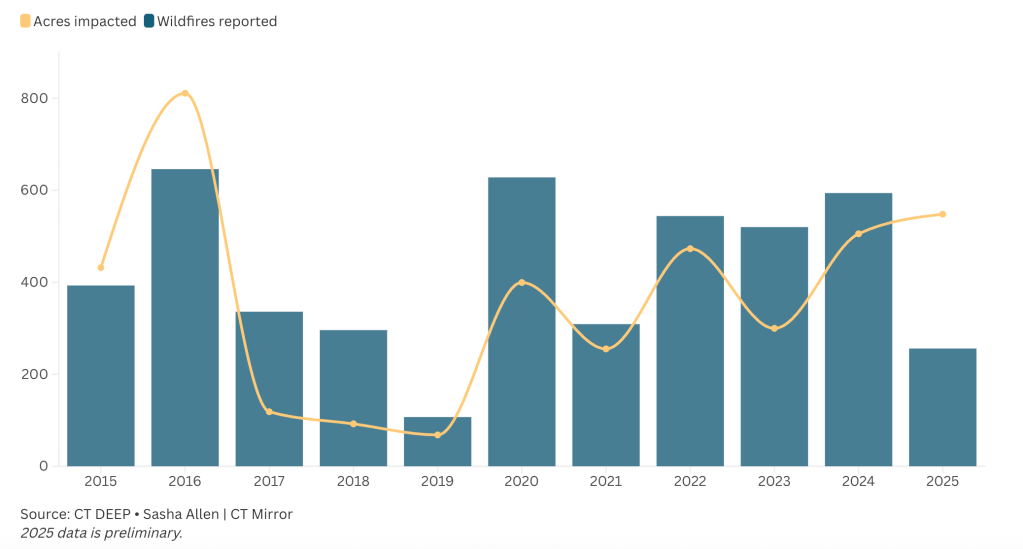
Connecticut has seen a reduction in the size of wildfires over the past century, yet the threat remains due to increasing drought conditions and the prevalence of dead and dying trees. In 2025, the state reported 256 wildfires impacting 584 acres, a testament to the changing landscape of wildfire management in the region.
Challenges in Fire Management
Chris Martin, the state forester for Connecticut, attributes the decrease in wildfire size to urbanization and increased regulations. However, he warns that the influx of dead trees adds to the fuel load, complicating the safety of firefighters. “Our fires are getting smaller over time,” Martin noted, citing population growth and forest fragmentation as contributing factors.
Connecticut experiences up to three fire seasons annually: spring, summer, and fall. Each season presents unique challenges. Spring fires often involve quick-moving surface fires fueled by dried grasses and leaves, while summer and fall droughts can lead to complex ground fires that are more difficult to control.
Historical Context and Current Risks
Historically, the state experienced larger fires, with 10,000-acre blazes being common in the 1900s, often sparked by train wheels. Today, most fires are human-caused, stemming from motor vehicle accidents, power line strikes, and unattended campfires.
Despite the decrease in size, the number of wildfires remains significant, especially in areas where residents live close to forested regions, known as the wildland-urban interface. In 2024, an exceptionally dry period led to over 200 fire starts in just 30 days, highlighting the ongoing risk.
The Eastern U.S., which includes Connecticut, sees some of the lowest acreage burned despite a high number of wildfires, according to the National Interagency Fire Center. This paradox underscores the effectiveness of current regulations but also the persistent threat posed by environmental changes and human activity.
Original reporting: The Connecticut Mirror — read the source article.