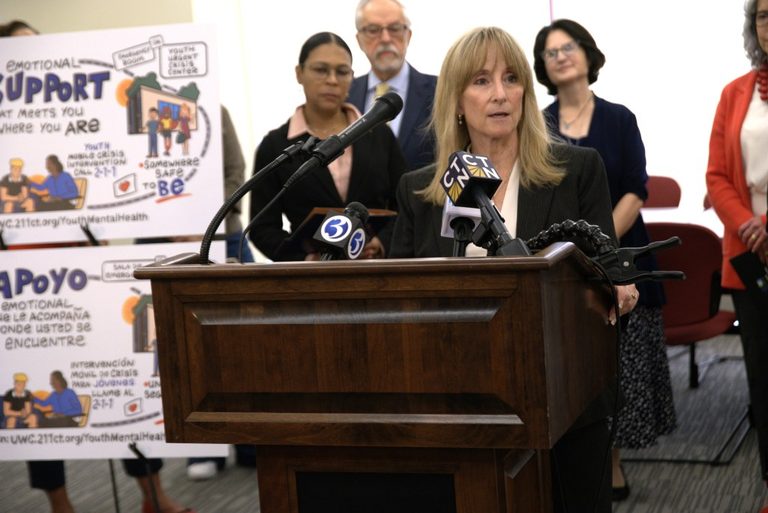
Connecticut Governor Ned Lamont announced Wednesday that Susan Hamilton will step down as commissioner of the Department of Children and Families (DCF) on Feb. 1, 2027. Hamilton, who was confirmed as the agency’s leader in April 2026, will leave the post after less than a year in her current term.
Background and tenure
Hamilton’s service to the state spans more than three decades in youth justice and child‑welfare work. She first led DCF from 2007 to 2011, a period that included court‑monitor oversight stemming from a 1989 federal civil‑rights lawsuit. During that time, reports indicated that roughly half of children in DCF care were not receiving basic service needs and that the reunification rate fell from about 72% to 56%.
After leaving the commissioner’s office in 2011, Hamilton ran a private law firm, served as a public defender, and returned to DCF in 2023 as general counsel. In September 2025 she was named interim commissioner and was confirmed by the legislature in April 2026.
Lamont’s response and the search for a successor
“Throughout her career, Susan has shown dedication and commitment to safeguarding the most vulnerable youths in Connecticut,” Lamont said in a press release. “I thank her for her service to our state, and I wish her nothing but the very best on this well‑earned retirement.” The governor noted that he had known Hamilton’s tenure would be brief when she accepted the interim role in 2025.
The Lamont administration is launching a nationwide search for Hamilton’s replacement. Lawmakers and child‑advocacy groups see the transition as an opportunity to bring fresh, possibly out‑of‑state, perspectives to the agency.
Legislative and advocacy viewpoints
Sen. Ceci Maher, co‑chair of the legislature’s Committee on Children, said the turnover of three commissioners in four years has limited the agency’s ability to draw on a broader national leadership pool. “We’ve had in the past four years three commissioners, all of whom came up through the Connecticut DCF system,” Maher told The Connecticut Mirror. “While that has been beneficial in some ways, it has not allowed Connecticut to draw on a national perspective of leadership that comes from a different area and perhaps brings a new way of looking at the problems with new solutions.”
Maher expressed hope that Lamont will consider candidates from outside the state who can “look at our DCF system through a new lens.” Child Advocate Christina Ghio echoed the sentiment, emphasizing the need for a commissioner committed to a long‑term tenure and capable of advancing both child‑protective services and behavioral‑health programs.
Challenges facing DCF
Recent reports highlight ongoing difficulties for the agency, including recruitment and retention of staff, and questions about case handling that preceded tragic child deaths. A 2026 legislative package introduced a new oversight committee and other reforms aimed at improving accountability.
Workers at Solnit South, a youth psychiatric facility in Middletown, protested conditions this summer after the facility’s hospital was taken over by UConn John Dempsey Hospital, underscoring concerns about the agency’s mental‑health services.
What’s next?
The new commissioner will likely assume office after the governor’s biennium budget is proposed in February, meaning the incoming leader will be tasked with implementing reforms using budget numbers that reflect the current administration’s priorities.
Former Child Advocate Sarah Eagan, now executive director of the Center for Children’s Advocacy, called Hamilton a “consummate professional” and warned that the next leader will need to steer DCF through “very turbulent waters” as Connecticut families continue to struggle without adequate community supports, foster homes, and services.
Stakeholders across the state will be watching the national search closely, hoping the next appointment brings stability, fresh ideas, and a renewed focus on protecting Connecticut’s most vulnerable children.
Original reporting: The Connecticut Mirror — read the source article.