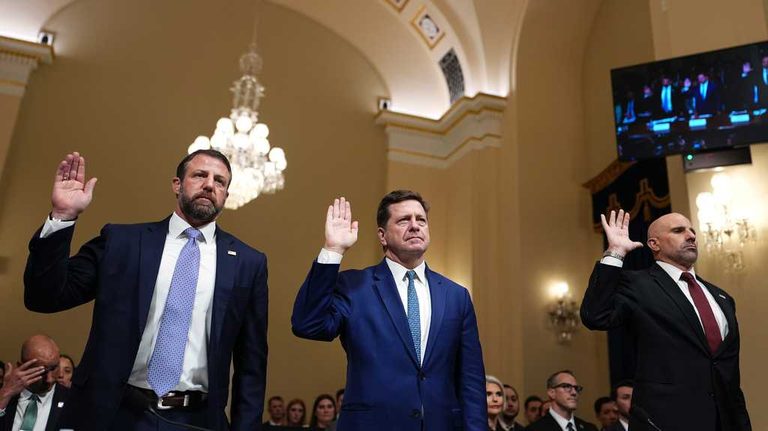
In a nationally televised hearing on Wednesday, senior members of the Trump administration faced a barrage of questions from members of Congress about a string of high‑profile technology outages that have disrupted banking services, Microsoft cloud platforms and the nation’s air‑traffic control system. The hearing, originally intended to address a broad range of global threats, quickly turned into a focused inquiry on these recent disruptions.
Officials attribute outages to maintenance, not adversaries
Director of National Intelligence Jay Clayton told the committee, “We have no indication that these events are related.” He emphasized that, to date, each incident appears to be a separate service interruption caused by routine maintenance and technical upgrades. Clayton noted that the pace of system upgrades in both the public and private sectors is accelerating to keep up with rapid technological change.
FBI Deputy Director Christopher Raia added that the bureau’s cyber experts are collaborating with private‑sector partners “out of an abundance of caution.” He reiterated, “Again, to foot‑stomp it, we have seen no malicious activity as of today.”
Homeland Security Secretary Markwayne Mullin echoed that sentiment, stating, “I’m 98% confident that this has nothing to do with our adversaries hacking or going after our systems.” Mullin’s confidence reflects the administration’s assessment that the outages are not the result of hostile foreign or domestic actors.
AI raises new cyber‑security concerns
While dismissing the current outages as unrelated to hacking, officials warned that artificial intelligence is dramatically increasing the speed, scale and sophistication of potential cyber attacks. The committee heard that AI‑driven tools could enable adversaries to automate attacks, making future threats more difficult to detect and mitigate.
Congressional criticism of CISA staffing cuts
Democratic Rep. James Walkinshaw (D‑VA) raised concerns about staffing reductions at the Cybersecurity and Infrastructure Security Agency (CISA), noting that “they fired and pushed out more than 1,000 cyber defenders at precisely the moment the cyber threat was exploding.” Mullin responded that CISA continues to fulfill its mission, though he did not provide detailed hiring numbers. He reminded lawmakers that earlier this year he announced plans to bring in hundreds of additional employees.
When asked whether the previous year’s firings were a mistake, Mullin said, “I wasn’t there when that was made. I don’t know the reasoning behind it, so I’m not going to talk about why someone was let go if I wasn’t involved.”
Immigration enforcement training update
The hearing also touched on immigration enforcement training under former Secretary of Homeland Security Kristi Noem. Mullin acknowledged that some training decisions were made before his tenure and are now being revised. He said every ICE agent currently on the streets has completed the restored thirteen‑week training schedule and passed a background check, with any remaining agents placed on administrative leave.
Iranian threat discussion
Lawmakers referenced a CNN report suggesting Iran might be developing a “dirty bomb” or chemical weapon for use in Washington, D.C. Clayton declined to comment on the specific report but warned that lethal plotting by Iran – both inside and outside the United States – has risen sharply. Raia added that while some reporting is “largely aspirational,” the administration takes the threat seriously and has revamped its Iranian threat mission center to better combat it.
FBI leadership absence noted
Republican Homeland Security Committee Chairman Andrew Garbarino called out the absence of FBI Director Kash Patel, noting repeated attempts to secure his testimony had been unsuccessful. An FBI spokesperson explained that Patel is currently engaged in field operations, conducting five separate law‑enforcement engagements this week, and that Deputy Director Raia was designated to appear before the committee.
The hearing underscored the administration’s confidence that recent outages are not the result of hostile cyber activity, while also highlighting the growing concern that AI could amplify future cyber threats. Lawmakers continue to press for transparency on CISA staffing and broader national‑security challenges.
Original reporting: WPBF (Treasure Coast / Hearst) — read the source article.