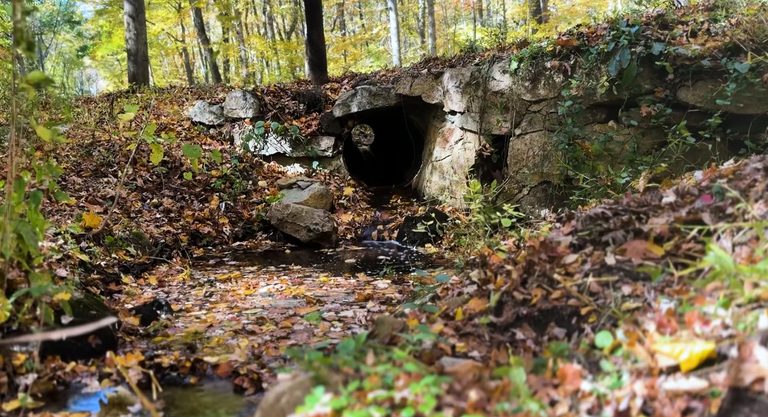
In the Pequot Woods along Sandy Hollow Road in Mystic, a culvert carries Fishtown Brook beneath the highway. That modest structure is one of roughly 25,000 road‑stream crossings that criss‑cross Connecticut, according to The Nature Conservancy.
Why culverts matter
While culverts allow roads and waterways to coexist, they can also fragment rivers, impede the natural movement of aquatic species, and contribute to flooding and infrastructure damage. “So that really segregates a lot of our rivers into smaller pieces and breaks them up,” said Emily Hadzopulos, senior freshwater restoration project manager with The Nature Conservancy in Connecticut.
Connecticut ranks among the most dammed states in the nation, with more than 5,000 dams. “We’re one of the most dammed states in the U.S.,” Hadzopulos added, underscoring the extent of water‑way fragmentation.
Comprehensive assessment
The nonprofit has now assessed nearly 700 culverts, documenting their locations, condition, and how easily wildlife and aquatic species can pass through them. The work is not solely about protecting fish; it also addresses community concerns. “Culverts that cross the roads and bisect our streams are also a cause for flooding, infrastructure damage, and so it’s really a win‑win for people and wildlife,” said Dr. Jessica Cañizares, director of coastal ecosystem projects with The Nature Conservancy in Connecticut.
Dr. Cañizares noted that culverts can affect nearby marshes, which provide essential ecosystem services such as habitat for a variety of wildlife. “If you lose a marsh, you’re losing that ecosystem service they provide,” she explained.
Next steps for local leaders
The findings will be presented to municipal officials and other stakeholders to prioritize which culverts should be repaired or replaced first. The project involves a coalition of partners, including state agencies, local conservation groups, and community volunteers.
By improving culvert design and condition, towns can reduce flood risk, protect property, and restore natural river connectivity—benefits that align with both public safety and the stewardship values many Connecticut families hold dear.
What residents can expect
As the recommendations move forward, residents may see upgrades such as larger openings, smoother interior surfaces, and better alignment with natural stream channels. These improvements aim to allow fish and other aquatic life to move freely while also mitigating flood‑related damage to roads and homes.
The assessment underscores a broader commitment to responsible land and water management, reflecting a partnership between conservation experts and local government that serves both the environment and the community.
Original reporting: NBC Connecticut — read the source article.