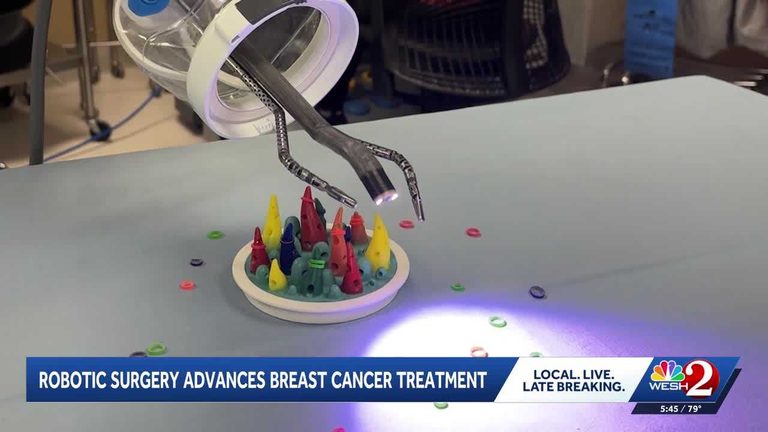
Kamilla da Escossia Campello Ronchi, a 41‑year‑old mother from Central Florida, chose a cutting‑edge robotic double mastectomy after genetic testing showed she faced a high risk of developing breast cancer. The procedure, performed at AdventHealth, marks the first time this robotic technology has been used for such a surgery in the region.
Family history drives decision
Ronchi said her choice was deeply personal. “My children are the most important thing to me,” she explained, adding that her mother’s battle with breast cancer—ending when Ronchi was just eight—left a lasting impression. “Watching my mom suffer and then growing up without her was really hard. I want to be there for my kids.”
Robotic technology offers precision and smaller incisions
Dr. Devina McCray, the surgeon who led the operation, praised the robot’s ability to enhance her movements and vision, allowing for smaller incisions and a clearer view of tissue layers. “It enhances my movements, my eyes, and it allows me to make incisions that are smaller,” Dr. McCray said. The improved visualization helps surgeons avoid nerve damage, a common side effect of traditional mastectomies that can leave 60‑80 % of patients without breast sensation.
According to Dr. McCray, early patient reports are encouraging: “Anecdotally, from patients’ reports, they are getting their sensation back.” The robot also assists with reconstruction, aiming for more natural results.
Patient satisfaction and outlook
When asked if the results looked natural, Ronchi responded, “Yeah. It does. Yeah. Completely. I think it’s better than before. Yeah. It’s even better than before.” She expressed gratitude for the care she received and optimism about her future.
Dr. McCray emphasized that advances in breast‑cancer treatment are now shifting focus toward quality of life after cancer. “We’ve been so focused on the treatment of breast cancer and breast cancer treatment. We do so well with breast cancer, even advanced stages. But now we’re starting to realize women are living longer, and we really have to focus on what that means and how to help them,” she said.
The surgeon also highlighted a growing concern: breast‑cancer diagnoses are increasingly affecting women in their 20s, 30s, and 40s. “My goal is not for them to just feel like they’re themselves, but even feel like they look better than what they used to be,” Dr. McCray added.
Implications for Central Florida women
This pioneering use of robotic surgery provides a new option for women facing high‑risk diagnoses, offering potentially better cosmetic outcomes and faster recovery. As more hospitals adopt the technology, Central Florida patients may benefit from reduced scarring, preserved sensation, and a stronger sense of normalcy after surgery.
Ronchi’s story underscores the importance of early genetic testing, proactive health decisions, and the role of advanced medical tools in safeguarding families and future generations.
Original reporting: WESH Orlando — read the source article.