Chicago – The Illinois electric utility ComEd has filed regulatory paperwork showing that linking 30 new data centers to its grid will cost roughly $3.1 billion. While consumer advocates warn that the expense could be passed on to ordinary households and small businesses, ComEd says its safeguards – including $721 million already collected in deposits and $1.1 billion secured through ten‑year credit lines – will keep ratepayers protected.
Breakdown of the projected costs
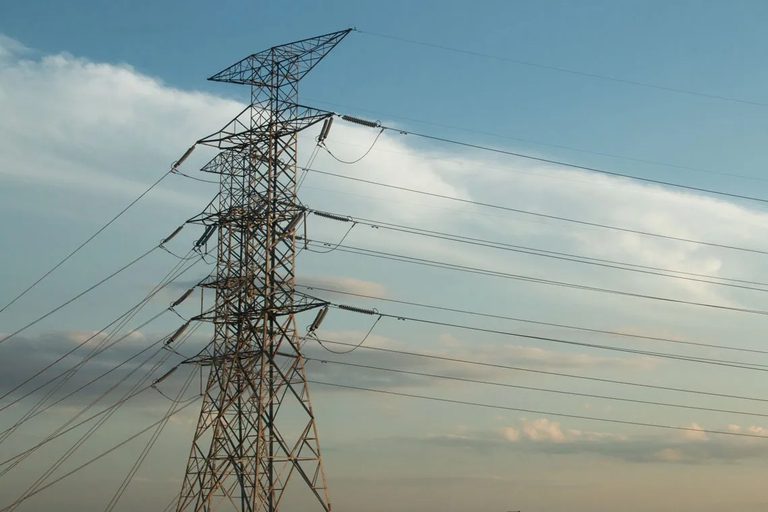
The $3.1 billion estimate covers both transmission and distribution upgrades. Transmission, which moves high‑voltage power from generation plants to local substations, accounts for about $1.6 billion. Distribution – the lower‑voltage lines that deliver electricity to homes and businesses – makes up the remaining $1.5 billion. Individual transmission projects can exceed $100 million, with two cited projects projected at $289 million and $269 million respectively.
Consumer groups raise concerns
Advocacy organizations including the Citizens Utility Board and the Environmental Law & Policy Center argue that the $721 million in deposits, less than a quarter of the total cost, leaves a potential $2 billion gap that could be spread across regular customers’ bills. “Ordinary households should not foot the bill to provide power to data centers,” said Nick Wallace, senior associate attorney with the Environmental Law & Policy Center.
Jim Chilsen, spokesperson for the Citizens Utility Board, added, “These data centers are some of the wealthiest corporations in the world. They always say, ‘Trust us, we’re going to pay our energy bills,’ but Illinois customers can’t afford to take big tech’s word for it.”
ComEd’s defense
ComEd counters that the consumer‑group analysis overlooks the $1.1 billion secured by lines of credit that guarantee rate payments from the data centers for ten years. Max Leichtman, the utility’s director of economic and workforce development, emphasized that the deposits are only part of the picture. “The deposits that today stand at $721 million may continue to increase as these projects move forward and become more mature and more well‑defined,” he said, noting that additional funds could be collected later.
Leichtman also clarified that any remaining distribution costs would be allocated among similar large‑load customers, not spread evenly across all ratepayers. “That doesn’t mean that’s all we’ll ever collect,” he added.
Regulatory safeguards
Since 2025, the Illinois Commerce Commission has required large customers, including data centers, to sign Transmission Security Agreements (TSAs). These agreements obligate customers to provide a line of credit guaranteeing payment of transmission rates for ten years, even if a project never materializes. Nineteen of the thirty projects pre‑date the TSA requirement, but the utility says the agreements have already protected $1.1 billion of the planned transmission costs.
ComEd also proposes a new rate‑allocation model that would assign costs directly to each data center based on its specific infrastructure needs, rather than spreading costs across a broader customer class. The utility argues this approach, combined with TSAs and deposit requirements, demonstrates a proactive stance in protecting Illinois ratepayers.
Industry perspective
Eric DeBellis, general counsel for the Citizens Utility Board, acknowledged that TSAs are an improvement but warned they still leave a “substantial gap” that households and small businesses should not bear. “We don’t want to pay for grid bridges to nowhere,” he said.
Despite the debate, ComEd maintains that requiring upfront payments from data centers could hinder their ability to do business in Illinois, potentially limiting economic development and job creation in the state.
What’s next?
The utility’s filing will be reviewed by the Illinois Commerce Commission, which will decide whether the proposed cost allocation and safeguards are sufficient. Stakeholders on both sides say the outcome will set an important precedent for how Illinois manages the growing demand for power from hyperscale data centers, a sector that many see as critical to the state’s future tech economy.
Original reporting: Block Club Chicago — read the source article.