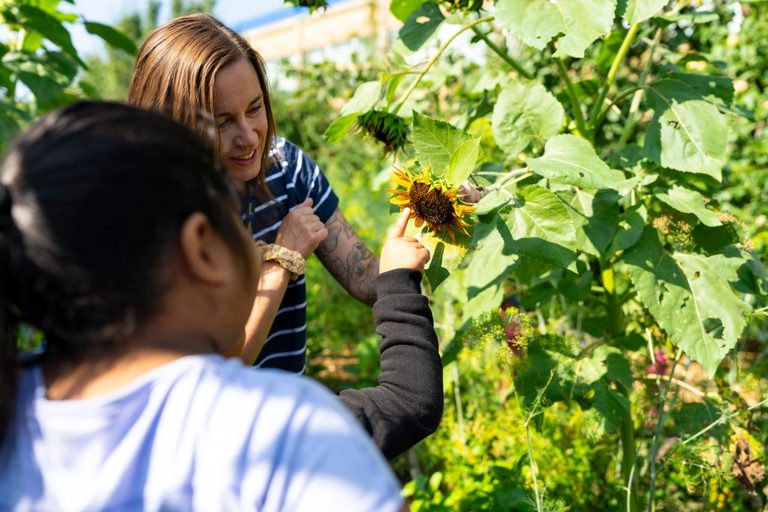
Columbia Heights students are finding a place to learn and heal at the Blooming Heights Edible Schoolyard, a districtwide teaching garden. The garden is part of the summer Encore program, which aims to combat the “summer slide” in academic progress.
A Safe Space for Students
The program is especially significant this year, following a winter when Immigration and Customs Enforcement (ICE) agents detained seven Columbia Heights students and dozens of their parents, causing hundreds more to hide at home in fear. The district has made extra recruitment and programming efforts to support kids’ needs, including social workers on site and mental health services.
The garden provides a safe space for students to connect with nature, culture, and healthy eating. It also offers job opportunities for high school students, funded through a partnership with Anoka County. The students help take care of the garden and participate in hands-on activities, such as a pollinator relay.
Cultural Significance
The garden features plants that resonate with students’ cultures, including the Indigenous companion planting “four sisters” of corn, beans, squash, and sunflower. Students can also explore native foods, such as currants and Juneberries. The garden’s hand-painted signs are labeled in English, Spanish, Ojibwe, Dakota, and Somali, reflecting the diversity of the student body.
For the students, the garden is a place of wonder and discovery. They can touch and smell the plants, and learn about their cultural significance. The garden also provides a sense of community, as students from different schools come together to learn and have fun.
Original reporting: Sahan Journal — read the source article.