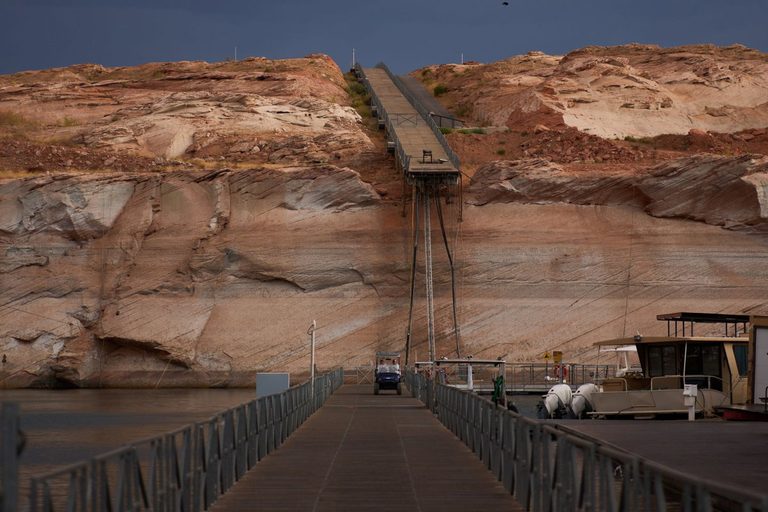
A new federal plan will require California, Arizona, and Nevada to slash their water use from the drought-stricken Colorado River by 16 to 20% through 2028. This plan aims to address the severe drought affecting the region, which has caused reservoirs to plummet to historic lows.
Background
The Colorado River is the lifeblood of the Southwest, irrigating over 5 million acres of farmland, generating enough electricity to power around 700,000 homes, and providing water for 40 million people. However, the river has shrunk dramatically over the past 25 years due to heavy use and climate change.
The combined water level in Lake Powell and Lake Mead, the most important Colorado River reservoirs, fell to a historic low last week. The lower basin states, which have historically used the most water, will face mandatory cuts, while the upper basin states will not be compelled to cut their water use.
Implications
Experts fear that the current plan may not be enough to save the lifeblood water basin as vital reservoirs continue to plummet toward record lows. The cuts will mark the latest stage of a long-running effort to figure out how seven basin states should share the depleted water of the Colorado River.
Arizona, in particular, has been resistant to mandatory cuts, arguing that climate change has reduced water availability and the cuts should be shouldered by the more water-intensive states. The state is likely to face the steepest cuts during times of shortage due to a deal it made in the 1960s.
Original reporting: KRDO (Colorado Springs metro) — read the source article.