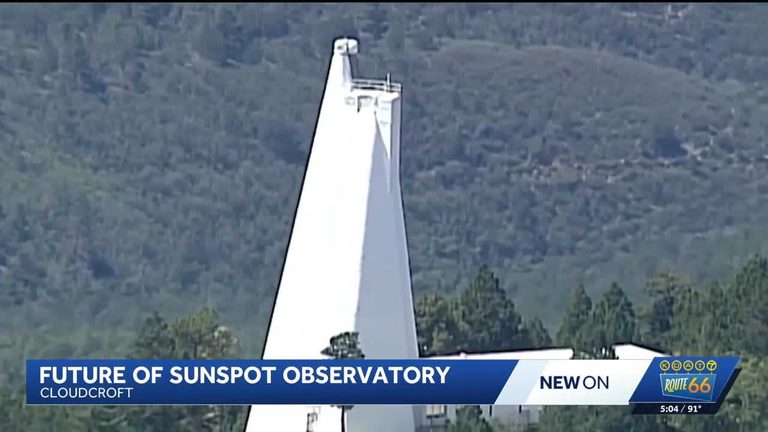
Cloudcroft, N.M. – After the National Science Foundation declared the mercury‑contaminated Dunn Solar Telescope unsafe to reopen, local officials are pushing for a two‑year pause on demolishing the rest of the Sunspot Observatory complex. Mayor Pro Tem Keith Hamilton said the decision to dismantle most of the infrastructure was expected, but he emphasized the need for time to find a new purpose for the site.
Pause proposal and potential new uses
Hamilton supports a proposed 24‑month moratorium on demolition, which would give the community and partners a window to secure financing and develop a plan. He noted that the Forest Service, which owns the land, has not ruled out alternative uses such as scientific programs, recreation, or dark‑sky tourism.
Potential ideas include a dark‑sky tourism destination, astronomy education programs, camping facilities, hiking trails, and other recreational opportunities that could draw visitors to the Tularosa Basin view. Hamilton also wants the Sunspot Visitor Center preserved and possibly converted into a museum that chronicles the site’s military, academic, and scientific history.
Advocates rally for federal support
Sunspot advocate Dave Dooling has briefed staff from U.S. Senators Ben Ray Luján and Martin Heinrich, as well as Rep. Gabe Vasquez, urging New Mexico’s governor and congressional delegation to request additional time from federal officials. Dooling said preserving the housing, camping areas, and older telescope domes would be a victory, even if the site does not resume scientific research.
“As an education facility, it has great potential,” Dooling said.
Next steps
The Forest Service has reached out to organizations that manage similar properties, though no firm interest has been reported. No specific demolition timeline has been provided. Hamilton and Dooling say the next critical step is identifying a partner before the remaining structures are removed.
“It’s sad we may lose a landmark, but public safety must come first,” Dooling added. “We still want to preserve the 90‑95 % of the site that remains viable.”
Original reporting: KOAT Albuquerque — read the source article.