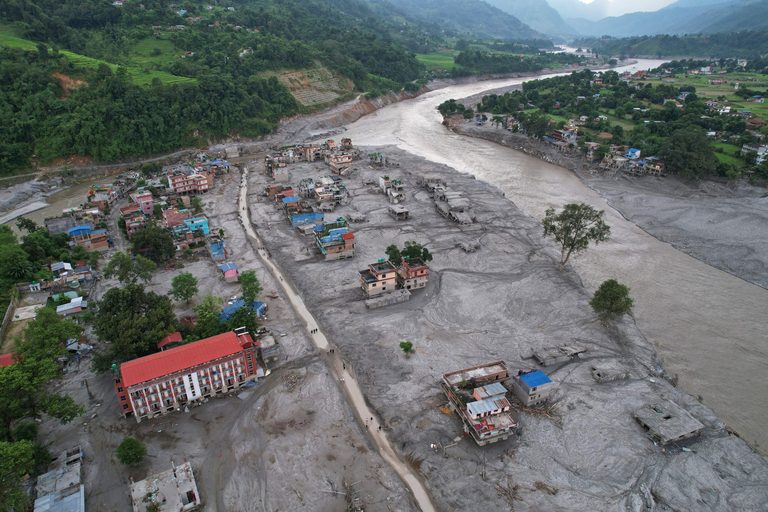
Human‑induced global warming has made the Himalayan slope that collapsed in late August even more unstable, a new analysis says. The study, released Thursday by the World Weather Attribution, found that rising temperatures have thinned glaciers and melted permafrost, increasing the risk of such catastrophic events.
Key findings of the report
The researchers noted that while the Aug. 26 disaster was not solely caused by climate change, a 2015 earthquake likely weakened the rock years before the collapse. Climate scientist Ben Clarke of Imperial College London said the event was not an extreme weather incident, but the long‑term fingerprints of climate change are evident.
Warming has pushed the elevation at which ground stays permanently frozen upward by roughly 100 meters (328 feet) each decade. This exposes rock at higher altitudes to longer periods above freezing, causing permafrost to thaw and creating cracks that weaken the rock face beneath the ice.
Geoscientist Jakob Steiner of the University of Graz, who has worked in the Himalayas since 2006, reported that monitoring instruments around 5,000 meters (16,404 feet) now show some rock and ground no longer remain frozen year‑round.
Glacier retreat adds to instability
The report also highlighted rapid glacier loss as a destabilizing factor. Glaciers in the region have been losing more than half a meter (about 1.6 feet) of thickness each year. The Langtang Lirung glacier, near the disaster site, has retreated about half a kilometer (0.3 miles) since the 1990s, exposing rock that was once covered by ice.
More than 63,000 glaciers across the Himalayas feed at least ten major Asian rivers, supporting the food, water, energy and livelihood security of billions. Studies show that about 78 % of glacier area between 4,500 and 6,000 meters (14,763‑19,685 feet) is highly exposed to warming. United Nations data indicate that between 2000 and 2019, glaciers lost roughly 267 billion tons of ice per year.
Human impact and future risk
More than 1,300 people were killed and over 5,000 remain missing after the massive rock and glacier collapse near Nepal’s border with China. The resulting torrent of water, ice, boulders and sediment devastated communities along the Trishuli River corridor, causing billions of dollars in damage.
Researchers warned that the size and speed of the collapse overwhelmed Nepal’s disaster‑risk reduction plans and early‑warning systems. Unlike rain‑induced floods, sudden slope failures in remote high mountains are extremely difficult to predict.
Climate scientists emphasized that the most important step to reduce future risk is to rapidly stop using fossil fuels that drive global temperature rise. Continued warming will worsen permafrost melt, glacier loss and related hazards, making such events more frequent.
Original reporting: Alexandria, VA News – WTOP News — read the source article.