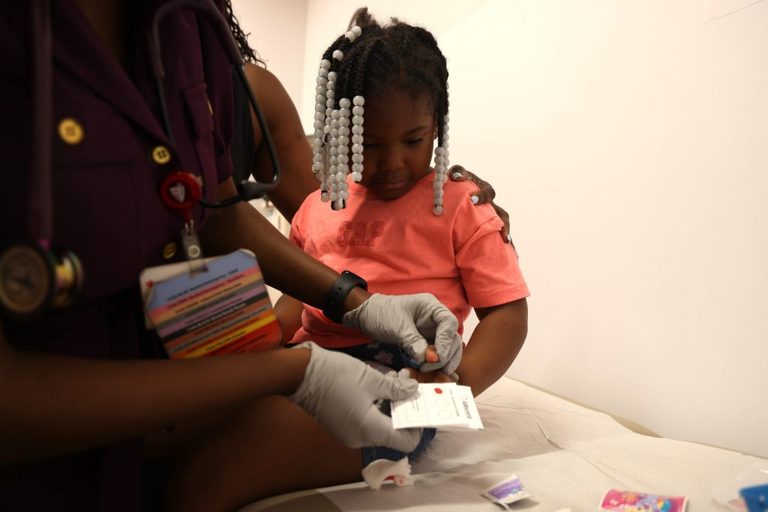
Cleveland health systems have collaborated to boost lead screening in children. The effort, which involves five health systems, aims to increase the number of children being screened for lead poisoning. Dr. Olushola Fapo, a pediatrician at University Hospitals Rainbow Ahuja Center for Women & Children, is part of the collaborative effort. She uses a finger prick test to screen children for lead poisoning during wellness visits.
Collaborative Effort
The collaborative effort includes University Hospitals, the Cleveland Clinic, MetroHealth, Neighborhood Family Practice, and Care Alliance. The health systems began using the finger prick test to screen children for lead poisoning during wellness visits. The test is less invasive than a traditional blood draw and can be done quickly in a doctor’s office.
The results of the collaborative effort have been positive, with the rate of children under two being screened for lead poisoning increasing from 69% to 78% over the past year. However, there are still challenges to be addressed, including ensuring that children with elevated lead levels receive follow-up care and expanding the screening program to include more children.
Importance of Lead Screening
Lead poisoning can cause irreversible damage to a child’s brain, resulting in delays and behavior issues. The Centers for Disease Control and Prevention (CDC) recommends that all children be screened for lead poisoning at ages 12 and 24 months. In Cleveland, the problem of lead poisoning is particularly acute, with many homes containing lead-based paint.
Gloria Blevins, the executive director of the Black Child Development Institute, emphasized the importance of community testing options to reach more children. "How do we build that bridge between community and hospital systems?" she asked. "We have to do a better job of that."
The collaborative effort has been funded by a $1 million investment from the Lead Safe Cleveland Coalition. However, the funding is set to expire, and it is unclear whether the health systems will be able to sustain the increased screening rates without it.
Original reporting: Signal Cleveland — read the source article.