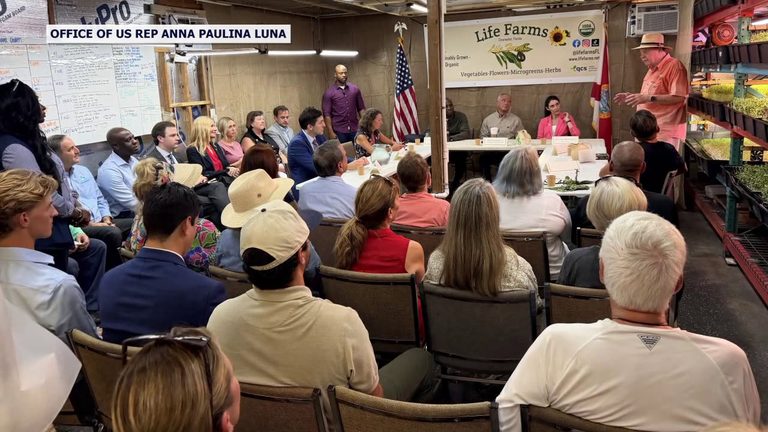
Clearwater, Fla. – On Tuesday, a roundtable hosted at Life Farms brought together federal and state officials to discuss a major new effort to revitalize Florida’s agricultural soil. The meeting, attended by U.S. Secretary of Health and Human Services Robert F. Kennedy Jr., Rep. Anna Paulina Luna, Florida Surgeon General Dr. Joseph Ladapo and a group of state agricultural leaders, focused on regenerative farming practices that reduce reliance on synthetic chemicals such as glyphosate.
Federal pilot program aims to transform local farms
During the discussion, Kennedy highlighted a $1 billion pilot program jointly funded by the Department of Health and Human Services, the U.S. Department of Agriculture and the Environmental Protection Agency. The initiative is designed to provide grants and technical assistance to growers who adopt soil‑building techniques, cover cropping, reduced tillage and other regenerative methods.
“Farmers are locked in a system where their soil is being degraded by pesticides,” Kennedy told FOX 13. “The microbiomes are being destroyed, which means the soil can’t absorb water, leading to runoff. Agronomists estimate we only have 30 to 50 harvests left if we don’t change course.” He added that the program has already received more than 60,000 applications from interested growers across the Tampa Bay area.
Local leaders push for budget realignment
Rep. Luna used the forum to call on Congress to re‑wire the federal budget, directing funds away from large corporate agribusinesses and toward smaller, family‑run farms. She urged Pinellas County residents to examine food labels and use state and federal resources to research potential toxins, such as arsenic, that may be present in their diets.
“As we head into the holiday season, make sure you check those websites and ensure your kids are healthy,” Luna said, emphasizing the connection between nutrition, family well‑being and responsible stewardship of the land.
Scientific debate continues
While the roundtable presented a united front on the need for change, Kennedy’s claim that pesticides are destroying soil microbiomes remains a point of contention among some agricultural scientists. Critics argue that the relationship between pesticide use and long‑term soil health is more nuanced and call for additional research before large‑scale policy shifts.
What the pilot means for Clearwater growers
For local farmers, the pilot represents a potential lifeline. Grants could cover the cost of transitioning to cover crops, purchasing equipment for reduced‑till practices, and accessing expert agronomists who can guide soil restoration. The program also promises to create new jobs in agronomy, research and sustainable‑farming consulting, aligning with Clearwater’s broader economic development goals.
State agricultural officials indicated that the pilot will be rolled out in phases, beginning with a select group of farms that demonstrate a clear commitment to regenerative practices. Those farms will serve as demonstration sites, showcasing measurable improvements in soil health, water retention and crop yields.
Community response
Local residents expressed cautious optimism. “It’s encouraging to see the federal government taking soil health seriously,” said a Clearwater farmer who preferred to remain unnamed. “If the funding is real and the guidance is solid, this could be a game‑changer for small producers who have struggled under the weight of chemical‑intensive farming.”
The roundtable concluded with a pledge from the participating officials to continue dialogue with growers, ensuring that the pilot’s implementation reflects the needs of Florida’s agricultural community while advancing the nation’s broader goal of sustainable food production.
Original reporting: Tampa Bay Florida News (HLL/CB) — read the source article.