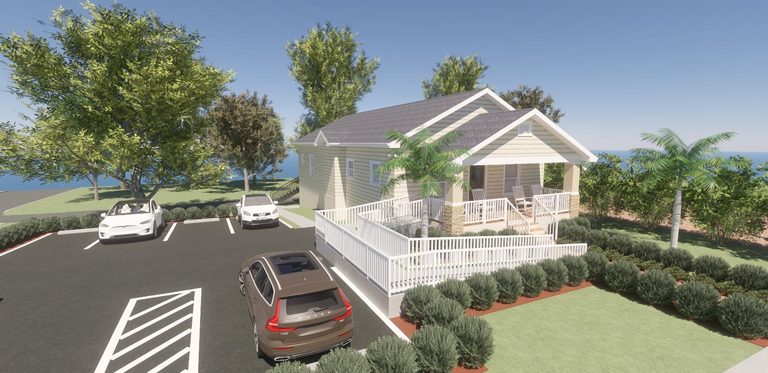
Clearwater property owner Frank Persechino is committing between $250,000 and $500,000 to rehabilitate a 1920‑era duplex on North Fort Harrison Avenue. The plan keeps the historic shell intact, gutting the interior, updating the building to current code, and reopening the original front porch.
Why the project matters for Pinellas housing
Pinellas County continues to add large apartment complexes, but the region’s older, smaller housing stock presents a different challenge. As homes age, owners must decide whether to demolish or invest in costly upgrades. Persechino’s decision to restore rather than replace reflects a growing recognition that preserving historic structures can provide affordable, flexible housing options.
St. Petersburg, the county’s largest city, recently highlighted the condition of its older housing stock. According to a 2022 census‑based grant application, more than 96,000 homes—about 68% of the city’s housing—were built before 1980, and over 52,000 pre‑date 1960. City officials note that older properties often require greater maintenance and can bring added rehabilitation costs, but they also encourage the reuse of historic buildings when feasible.
Project details and timeline
Persechino, a registered nurse, bought the property before the 2008 real‑estate crash. The house had been divided into weekly rentals, with the front porch enclosed to create additional interior space. “I’ve been told many times, just tear it down, it’s easier,” he recalled. Instead, he intends to rebuild the gutted interior, bring the structure up to current building codes, and restore the porch to its original open design. An adjacent empty lot will serve as parking for future guests.
The renovation is expected to take about a year, though a firm construction schedule has not yet been set. Once completed, the four‑bedroom unit will operate as short‑term lodging, targeting traveling nurses and other temporary residents. Persechino envisions the finished property reminding passersby of a “grandma’s house” or a familiar Midwestern home.
Historical context of North Fort Harrison Avenue
The Clearwater Historical Society notes that North Fort Harrison Avenue evolved as a housing corridor in the early‑ and mid‑20th century, providing duplexes, triplexes, and small apartment buildings for hotel workers, citrus laborers, railroad employees, and other laborers. Before U.S. 19, Fort Harrison served as the main north‑south route, linking downtown and the waterfront. After World War II, the corridor saw a surge of small apartments, many of which remain rental housing today.
Persechino has consulted with Allison Dolan, president of the Clearwater Historical Society, to ensure the exterior retains the feel of an older Clearwater home while the interior is modernized. He hopes the restored porch will become a welcoming feature for guests and a visual reminder of the city’s architectural heritage.
Potential impact on the community
By preserving a historic structure and converting it to short‑term lodging, the project could serve multiple community needs. It offers a modestly priced housing option for traveling professionals, supports local tourism, and demonstrates a viable path for other owners of aging properties who might otherwise consider demolition.
As Pinellas County grapples with the cost of maintaining its older housing stock, projects like this illustrate how private investment, combined with historic‑preservation incentives, can help keep neighborhoods vibrant and affordable.
Original reporting: St. Pete Catalyst — read the source article.