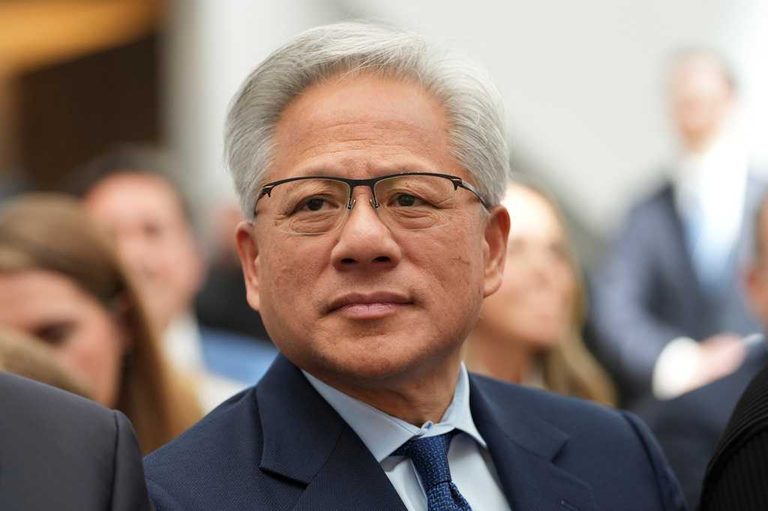
Beijing on Monday dismissed the allegation that Nvidia chief executive Jensen Huang was part of a Chinese espionage scheme, describing the story as a “smear” against China. Ministry of Foreign Affairs spokesperson Guo Jiakun said the claim was “unsubstantiated” and merely an attempt to tarnish the country.
Allegations and corporate response
The New York Times reported that Huang had an intimate relationship with a business executive identified by U.S. intelligence as gathering information for Beijing. Huang reportedly told Nvidia’s board about the relationship but did not name the individual, who the newspaper said was a Chinese citizen named Alice Huang.
Nvidia announced on Sunday that it would launch an internal investigation into the matter. The company also noted that its shares fell about 5% in pre‑market trading following the report.
President Trump’s role in chip policy
Huang has previously lobbied President Trump to relax U.S. export restrictions on advanced chips. In 2024 the administration approved the sale of H200 chips to China, and earlier Trump also supported the sale of the less‑advanced H20 chips, which were designed for the Chinese market while remaining compliant with U.S. export rules.
While the H200 models are not Nvidia’s most cutting‑edge products, they are still considered advanced technology. Nvidia disclosed in an August filing that only a limited quantity had been sold to China because the Chinese government restricts such purchases.
Expert commentary
George Chen, partner and chair of the digital practice at The Asia Group, said the key questions are whether Huang knew of any espionage activity and whether any confidential or strategically sensitive information was compromised. “Those questions require evidence rather than speculation,” he wrote in a text to reporters.
Chinese state media echoed the government’s denial, suggesting the New York Times report could be aimed at destabilizing U.S.–China relations. The Global Times warned that “whenever China‑U.S. relations begin to improve, there are often those firing shots from the shadows.”
Implications for U.S. technology policy
The episode underscores the tension between protecting national security and maintaining a competitive edge for American technology firms. President Trump’s willingness to work with industry leaders like Huang to adjust export controls reflects a broader strategy of strengthening U.S. businesses while still addressing security concerns.
As the investigation proceeds, both the Chinese government and Nvidia have emphasized the need for factual evidence before drawing conclusions. The outcome may influence future discussions on how the United States balances trade, security, and innovation in its dealings with China.
Original reporting: WPBF (Treasure Coast / Hearst) — read the source article.