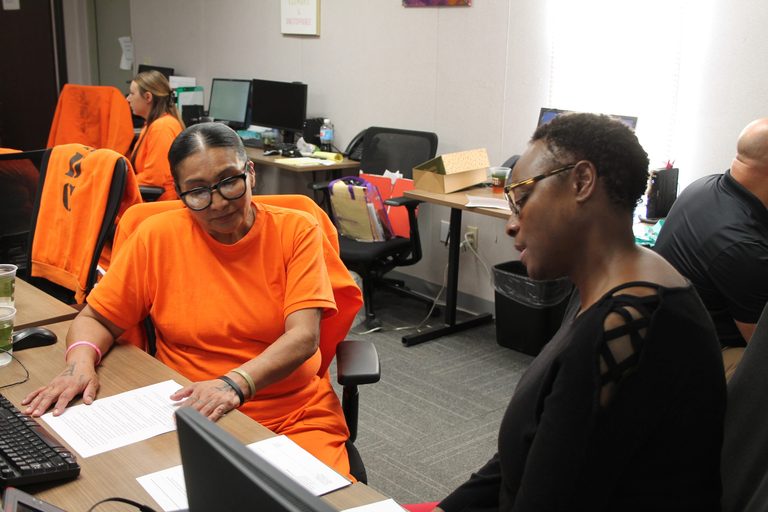
Whitestown resident Ashlee Liberty knows firsthand how hard it can be to re‑enter society after a long prison term. After serving ten years, she now works as a project engineer on construction sites, including AI data centers. Her success is part of a growing effort by the Televerde Foundation to give incarcerated women the tools they need to thrive once released.
New AI literacy course funded by OpenAI
The Televerde Foundation, which runs the PATHS program for women in Indiana, Arizona and Florida, recently received a $200,000 grant from the OpenAI Foundation. The money will fund an AI literacy course and an AI‑powered resource center for women in the program’s final two years of incarceration.
PATHS, a six‑month curriculum launched in Arizona in 2021 and expanded to Indiana in 2023, operates at Rockville Correctional Facility, Madison Correctional Facility and the Indiana Women’s Prison. It provides job‑skill training, life‑coaching, and post‑release mentorship. Graduates already see dramatically better outcomes: a University of Massachusetts Amherst study shows they are arrested again at a 3% rate—one‑eighth the state average—and face unemployment at one‑third the rate of other formerly incarcerated women. Their median income is twice that of peers who did not go through PATHS.
Why AI matters for re‑entry
Technology has moved on while many women were behind bars. Liberty recalls that when she left prison in 2023, devices like Amazon Alexa and Apple AirPods were already commonplace. Today, AI tools are part of everyday work and research. “If you’re not in the know with it, you can really be held back,” she says.
By teaching women how to use AI responsibly—searching for housing, employment, and community resources, as well as generating ideas for work projects—the program aims to close the digital gap that often leaves former inmates behind.
Support from the community and experts
Televerde CEO Michelle Cirocco emphasizes that the grant will allow the foundation to expand its reach and provide immediate post‑release support. Within 24 hours of release, a graduate is connected with a life coach; within a week, an employment coach begins job‑search assistance.
Indiana State University criminology professor Shannon Barton notes that re‑entry is the most difficult transition for women, citing barriers such as lack of recent work experience, education, and stable housing. While technology is changing quickly, she stresses that the biggest obstacle remains the scarcity of programs inside prisons.
Impact on families and communities
When women secure stable employment, they are better able to provide for their families and avoid the cycle of recidivism that strains local resources. The program’s success aligns with traditional family values and the community’s desire for safer neighborhoods.
PATHS graduates number about 110 women per year, and more than 1,800 women were released in 2025 alone, according to the Indiana Department of Corrections. Cirocco says, “We don’t have a shortage of talented women in our prisons; we have a shortage of opportunities for them to demonstrate what they’re capable of.”
Looking ahead
With the new AI curriculum, the Televerde Foundation hopes to equip even more women with marketable skills that match today’s job market. As AI becomes an integral part of many industries, giving these women a head start not only benefits them individually but also strengthens Indiana’s workforce and upholds the values of personal responsibility and family stability.
Original reporting: Mirror Indy — read the source article.