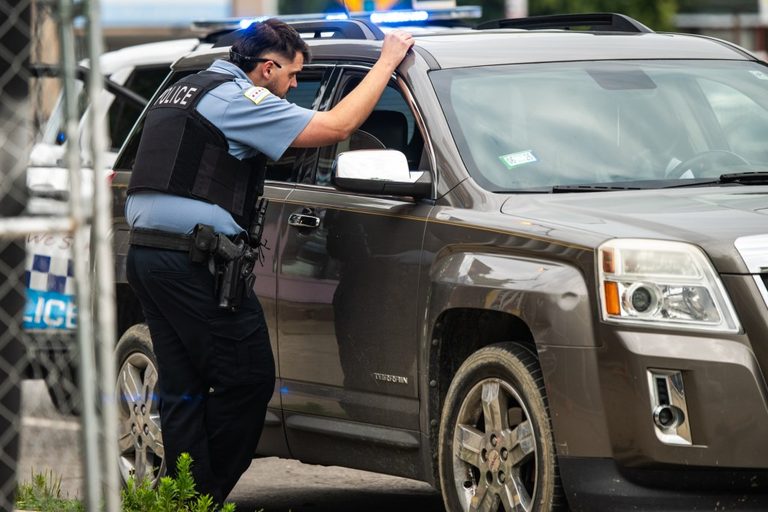
Chicago police have continued to conduct hundreds of thousands of off-the-books traffic stops, failing to disclose them to a state oversight agency in violation of Illinois law. This has led to a lack of transparency and accountability in the department.
Background
In March 2024, a traffic stop for an alleged seat belt violation quickly spiraled into a hail of exchanged gunfire that resulted in 26-year-old Dexter Reed being killed by plainclothes police officers. In response to the ensuing outcry, Chicago police leadership promised to finally confront the enormous number of traffic stops that have characterized life in the city’s Black and Latino neighborhoods—and the complaints of abuse, racial profiling, and excessive force that have trailed them.
Despite the promises, the problem of unreported stops has gotten worse. An investigation by Bolts and Injustice Watch found that the Chicago Police Department had failed to report more than one-third of traffic stops — a staggering 200,000 encounters — over the prior year. The department finally acknowledged the problem at a June 2025 City Council meeting, where a deputy director promised his office was working on a “fix.”
Consequences
The unreported stops have kept watchdog agencies and advocates from seeing the full picture of who officers are pulling over, why they are stopped, and what unfolds during the encounter. Community advocates have long warned that traffic stops breed resentment and distrust among Black and Latino communities.
State law requires officers to fill out a form, known as a blue card, each time they pull someone over. The lengthy forms include detailed information about where the stop occurred, who was stopped, the reason for the stop, and the outcome—whether the driver or vehicle were searched and if a gun or drugs were found.
Original reporting: Block Club Chicago — read the source article.