Chicago officials have taken legal action against the owner and occupant of a home on the 10500 block of South Maplewood Avenue in the Beverly neighborhood. The city filed a lawsuit this month seeking an injunction to stop unlicensed concerts, food service and alcohol sales, and to force the property to correct building‑code violations.
Legal request and safety concerns
During a hearing on Thursday, Cook County Judge Federico Rodriguez granted the city’s request for a comprehensive inspection of both the interior and exterior of the residence. City attorneys argued that when municipal workers responded to a recent unlicensed event, they discovered an unpermitted garage conversion and a rooftop deck that had been built without the required permits.
History of citations and cease‑and‑desist orders
The Maplewood Avenue home first attracted city attention in late May when the Business Affairs and Consumer Protection office visited after a ticketed gathering advertised as a live‑music, food and drink event. Inspectors issued cease‑and‑desist orders for operating without a food license, a liquor license, and a public‑place‑of‑amusement license. A second visit in June resulted in two additional citations for the same violations.
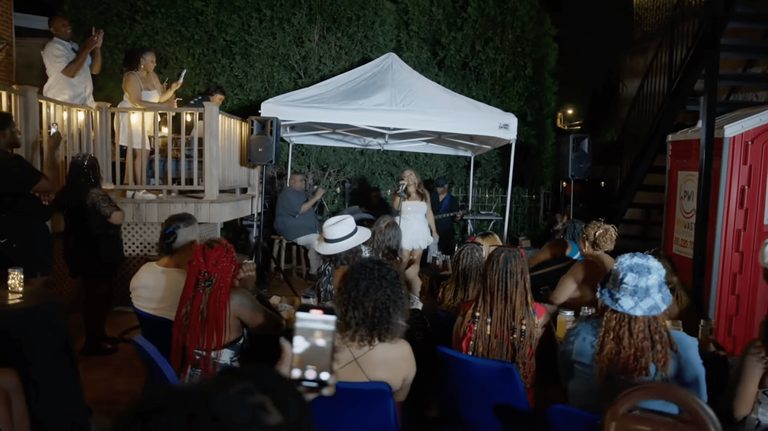
On July 18, the property hosted an event titled “Chanay’s Juke Joint: Love Hangover,” promoted through the Ticket Tailor platform. Tickets ranged from $20 for general admission to $45 for an all‑inclusive package that included a keepsake Moonshine Mason Jar, unlimited signature cocktails and a meal. The gathering featured live music, on‑site food preparation, alcoholic beverages, armed security and wristbanded attendees.
Building‑code violations
Four days before the July 18 event, a city inspection found that the rooftop deck attached to the garage had been constructed without the proper permits. The inspection required removal of all unpermitted work and restoration of the structure to its original condition. Building records show a permit was issued in April 2006 for a new garage, but the property later failed an inspection for deviating from approved plans. A subsequent permit altered the garage roof framing to support a deck, yet officials say the recent work still did not follow the approved plans and included additional unpermitted construction.
City’s lawsuit and next steps
The lawsuit asks the court to issue an injunction against the property owner and occupants, compel the owner to correct the building issues, and possibly appoint a receiver to oversee compliance work. Judge Rodriguez scheduled a follow‑up inspection for later this month and set the case for continuation on September 17.
Owner’s response
Chanay Walton, who lives at the residence and has hosted gatherings there since 2022, told Block Club Chicago in July that she had stopped listing the home as a venue rental and claimed the July 18 gathering was a private party for family and friends. Walton said tickets were later changed to free RSVPs and that no food or alcohol was sold at the event. She expressed frustration, stating, “No matter what I do, anytime that I entertain in my backyard, they are going to assume that I am operating a business, which I think is really ridiculous.”
Walton, her attorney and property owner Annette Daval did not respond to requests for comment at the hearing. The Department of Business Affairs and Consumer Protection also has a separate civil case against the property, though details were not disclosed.
Implications for the community
The city’s action underscores the importance of adhering to licensing requirements and building codes, especially when private residences are used for public‑type events. Residents and property owners in Chicago’s neighborhoods are being reminded that safety inspections and proper permits are not optional, and that violations can lead to significant legal and financial consequences.
Original reporting: Block Club Chicago — read the source article.