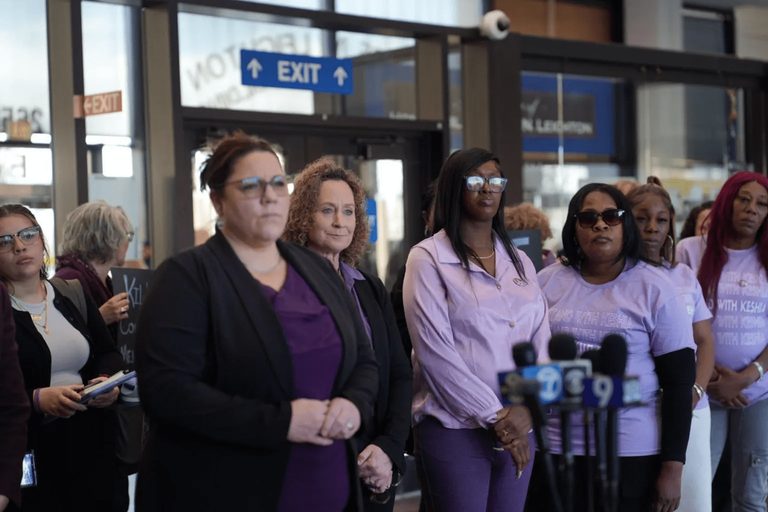
Chicago – Keshia Golden, a Black mother who says she acted in self‑defense, accepted a plea agreement on August 23 that reduces her charge to involuntary manslaughter and spares her from prison time. Under the deal, Golden will serve 24 months of probation and will not be required to register as a violent offender, a status that often creates barriers to housing and employment for families.
Background of the case
Golden was originally charged with first‑degree murder after the death of her boyfriend, Calvin Sidney, in October 2022. At the time of the incident Golden was eight months pregnant. She told police she stabbed Sidney with a knife to stop him from attacking her, striking his femoral artery. Sidney later died at a hospital. Golden was arrested shortly after the incident and treated for injuries she sustained.
The prosecution, relying on an account from a relative of Sidney, argued that the couple had been physically separated on the night of the killing and that Golden re‑engaged in the fight after the threat had passed. The defense maintained that Golden acted to protect herself from ongoing abuse.
Legal history and plea negotiations
Golden previously rejected a plea offer that would have reduced the charge to second‑degree murder with a sentence of time served. Her attorneys said that outcome would have jeopardized her future housing and career prospects. The new agreement, reached with Cook County State’s Attorney Eileen O’Neill Burke, allows Golden to avoid jail and the long‑term consequences of violent‑offender registration.
Advocates for Golden, including domestic‑violence supporters and legal scholars, have urged the state’s attorney to drop all charges, citing Sidney’s documented history of abuse. Court records show Golden called police more than 50 times during the relationship, and Sidney was arrested four times for harming her. No charges were filed in any of those prior incidents.
Protective order and its dismissal
While pregnant, Golden obtained a protective order against Sidney after he allegedly punched her in the face. She later dismissed the order, which her lawyers say was done under duress and fear of further retaliation.
Golden’s case reflects a broader pattern of women who kill abusive partners and face severe legal consequences despite extensive evidence of prior abuse. Leigh Goodmark, a professor at the University of Maryland School of Law, noted that such cases are “not uncommon” but often lack the documentation that Golden’s case possesses.
Resources for survivors
Domestic‑violence survivors in Chicago and across the nation can access confidential, 24‑hour help through the National Domestic Violence Hotline at 1‑800‑799‑7233 or online. The Network/La Red provides a dedicated crisis line for LGBTQ+ individuals at 617‑742‑4911.
The outcome of Golden’s plea deal underscores the complex intersection of criminal law, domestic‑violence advocacy, and the challenges faced by survivors seeking safety and stability for their families.
Original reporting: Block Club Chicago — read the source article.