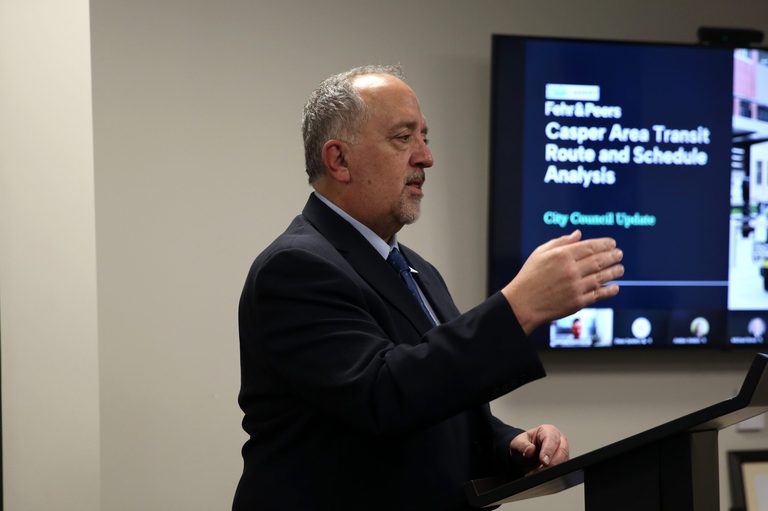
Casper City Council reviewed a new transit plan that would overhaul the local bus system and add on‑demand micro‑transit vans. The proposal, developed by the Casper Area Metropolitan Planning Organization (MPO) and consulting firm Fehr & Peers, emerged from public open houses and two community surveys conducted in June.
Community priorities shape the plan
Transportation planner Mikhail Kaminer said residents identified medical facilities, grocery stores and employment centers as the most important stops. Survey participants also expressed a clear preference for faster, higher‑frequency service rather than broad geographic coverage, citing frustration with current wait times.
“We did have 80 survey responses in total for the first survey and then about 60 survey responses in our second survey, both of which were incredibly meaningful and helpful to inform our process here,” Kaminer explained.
Three routing options evaluated
The MPO evaluated three cost‑neutral alternatives:
- Option 1: Maintain the existing one‑hour frequency while merging the yellow and green lines and extending service north and east.
- Option 2: Prioritize frequency by reducing bus arrivals to every 30 minutes, combining the purple, blue and orange routes into a single line, and shifting the green line to a dedicated north‑south corridor.
- Option 3 (preferred): Streamline the fixed‑route network to two primary lines operating on 30‑minute schedules, supplemented by on‑demand micro‑transit vans that provide curb‑to‑curb rides within designated zones.
Micro‑transit details
Under the preferred hybrid model, riders would request a micro‑transit van via a smartphone app or call center, with a target response time of 30 minutes or less. The vans would transport passengers to fixed‑route bus stops for the standard fare.
Kaminer noted that implementing micro‑transit would require operational changes such as updated signage, but the option received the highest level of early public support.
Potential ridership boost
Casper Area Transit Director Vern Tystad said roughly 60%–65% of current ridership is concentrated on the Blue and Green routes, while the remaining routes are under‑utilized. “We have four additional LINK routes that are driving in circles and it’s very inefficient,” Tystad said. “This will allow us to be more efficient with the resources that we have and allow us to deploy what we’ve got more efficiently.”
Station relocation and next steps
The plan also recommends moving the primary transit transfer station from Beech Street to Casper City Hall, giving riders direct access to municipal services and downtown destinations.
City councilors expressed support for the proposal, and MPO Director Beth Andress reported that neighboring communities such as Evansville and Mills favor the option, noting potential cost savings for those towns.
Final approval will require votes from the city councils of Casper, Mills, Evansville and Bar Nunn, as well as the Natrona County commissioners.
Original reporting: Oil City News (Casper WY) — read the source article.