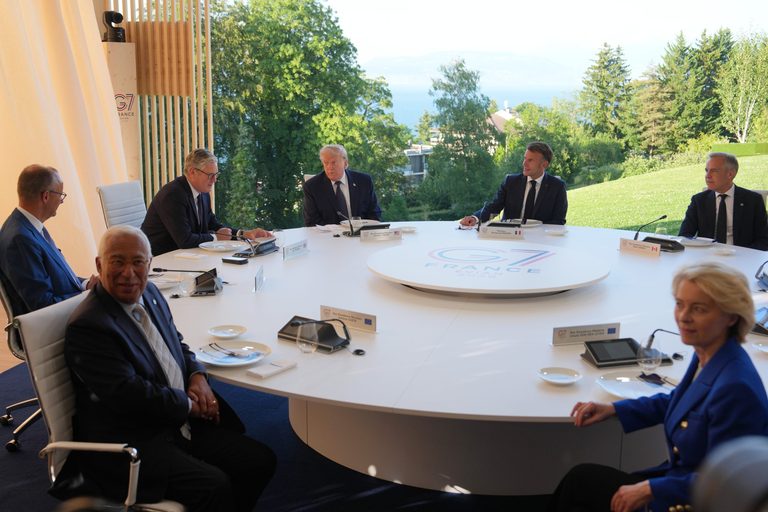
Toronto – In response to President Trump’s recent tariff threats toward Canada, Finance Minister Mark Carney announced an accelerated push to secure an associate‑member relationship with the European Union. Carney framed the move as a safeguard for Canadian sovereignty and an effort to broaden economic ties beyond the United States, which currently absorbs roughly 70% of Canada’s exports.
Trump’s Leverage Strategy
President Trump has warned that Canada’s growing closeness with the EU could be deemed a “hostile act” and has signaled the possibility of “very heavy tariffs” on European goods if the partnership is perceived as unfriendly. The administration’s stance reflects a broader strategy of using trade measures to ensure that the United States remains the primary market for its North‑American neighbor.
Carney’s European Outreach
Carney told the European Parliament that nations need sufficient economic strength to avoid dependence on any single power. He reiterated the proposal during a meeting with French President Emmanuel Macron in the French overseas territory of Saint‑Pierre‑et‑Miquelon, emphasizing shared values and collective resilience.
Since early September, Carney has been on a whirlwind diplomatic tour: hosting investors in Toronto, attending the State of the European Union address in Strasbourg, meeting Britain’s new prime minister in Liverpool, and returning to Ottawa for a parliamentary session before heading to the United Nations General Assembly in New York.
Diversification, Not Abandonment
Dominic Barton, Carney’s appointee to chair Invest in Canada and former global head of McKinsey & Co., stressed that diversification does not mean abandoning the United States. “We can’t complacently count on it,” Barton said. “It’s not about stopping work with the U.S.; it’s about cranking up the non‑U.S. side and being more ambitious there.”
Barton added that Canada has been “inward‑looking” and that Trump’s pressure serves as a “jolt” to build more globally competitive companies.
Ambitious Trade Goals
Carney aims to double Canada’s non‑U.S. trade over the next decade and is targeting a free‑trade agreement with India by the end of the year. He noted that Canada’s tariff‑free access to 1.5 billion consumers could double within six months if pursued aggressively.
Finance Minister François‑Philippe Champagne echoed the sentiment, stating, “The most sought‑after commodity today is trust. The world has changed, and America has changed. The world has taken notice.”
Political Support at Home
Former Prime Minister Stephen Harper, a longtime admirer of the United States, acknowledged that the current administration views deep economic integration as incompatible with Canadian sovereignty. Harper said, “Thus, to maintain that sovereignty, we must pursue diminished reliance on the United States.” He called the shift “necessary,” despite his personal affection for the historic Canada‑U.S. partnership.
Challenges Ahead
While Carney’s vision is bold, experts note that an EU associate‑member status does not yet exist and that Europe cannot quickly replace the U.S. market, which purchases nearly three‑quarters of Canadian exports. The upcoming Canada‑EU summit in Montreal (Oct. 29‑30) will be a key test of how far the diversification strategy can progress.
Nevertheless, Carney and his allies argue that the current U.S. approach—using tariffs and uncertainty as leverage—creates an opportunity for Canada to showcase stability, rule of law, and reliability to global investors.
Original reporting: Alexandria, VA News – WTOP News — read the source article.