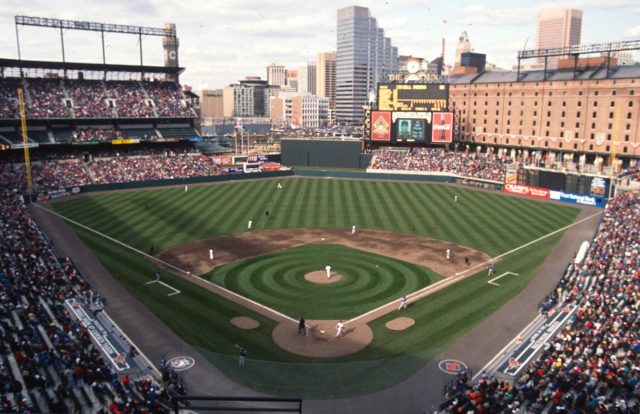
When Oriole Park at Camden Yards opened its doors in 1992, it marked a significant shift in the architectural design of major league ballparks. Located in the heart of Baltimore, this stadium set a new standard with its ‘retro-classic’ design, a style that has since influenced more than two-thirds of current major league ballparks.
The vision for Camden Yards was spearheaded by Larry Lucchino, then president of the Baltimore Orioles, who was inspired by early 20th-century venues like Forbes Field in Pittsburgh. The Maryland Stadium Authority chose to situate the park within Baltimore’s city grid, giving it a sense of belonging and history from day one.
Key features of Camden Yards include its brick facade, reminiscent of the Baltimore & Ohio Warehouse, and its asymmetrical field dimensions. These elements, along with the ‘Camden Green’ seats and intricate cast-iron designs, pay homage to the ballparks of yesteryear.
Influence on Modern Ballparks
The impact of Camden Yards extends beyond Baltimore. The Pittsburgh Pirates’ PNC Park, opened in 2001, and Target Field in Minneapolis, opened in 2010, both drew inspiration from Camden Yards’ integration with urban landscapes and emphasis on intimacy. PNC Park, for example, maximizes views of downtown Pittsburgh and the Roberto Clemente Bridge, while Target Field uses local materials to reflect Minnesota’s character.
These parks, like Camden Yards, prioritize open social spaces, allowing fans to enjoy the game while socializing with friends and family. This approach has become a hallmark of modern ballpark design, emphasizing community and connection.
Camden Yards’ legacy is a testament to the power of thoughtful design that respects both the sport’s history and the unique character of its location. As new ballparks continue to emerge, the influence of this Baltimore landmark remains evident, ensuring that each new venue is not just a place to watch baseball, but a part of the community it serves.
Original reporting: Baltimore Fishbowl — read the source article.