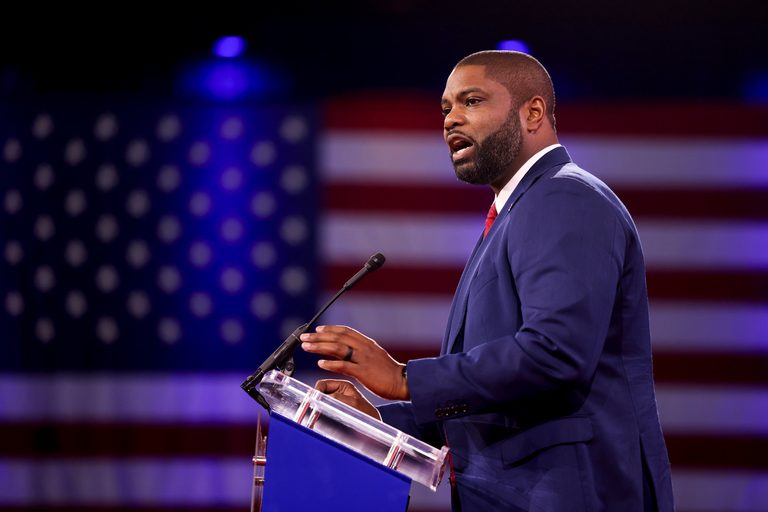
Florida voters are poised to make history. Republican U.S. Representative Byron Donalds is projected to win the 2026 gubernatorial election, becoming the state’s first Black governor. Donalds secured the Republican nomination after defeating Democratic candidate David Jolly in Tuesday’s midterm contest.
Trump endorsement fuels momentum
In February, Donalds announced his candidacy with a strong endorsement from President Trump, a longtime ally who has frequently relied on Donalds as a surrogate. The campaign website declares a commitment to “implement President Trump’s agenda to Make America Great Again,” signaling continuity with the administration’s priorities.
President Trump’s endorsement carries weight in a state where the former president’s influence remains a decisive factor for many Republican voters. While Trump’s record on primary governor picks has been mixed, a strong showing by Donalds would bolster the president’s standing and reinforce Republican dominance heading into the November general election.
Policy promises for Floridians
Donalds’ platform centers on three key promises: cutting taxes, overhauling Florida’s insurance regulations to lower consumer costs, and demanding greater price transparency from health‑care providers. He argues that affordability is a universal concern, saying, “The people of Florida want to make sure that the Florida dream is alive and well into the future. It doesn’t matter what your politics are. It doesn’t matter what the color of your skin is.”
His background in finance—as a credit analyst and portfolio manager—provides a foundation for his fiscal proposals. Since his election to the Florida House of Representatives in 2016 and his service in the U.S. House since 2021, Donalds has positioned himself as a conservative voice focused on economic growth and personal liberty.
Historical significance
At 47 years old, Donalds would join a very small group of Black governors in U.S. history, with only three having been elected before him. While the milestone is noteworthy, Donalds is expected to emphasize his conservative credentials over the symbolic aspect of his potential governorship.
The projected victory reflects broader trends in Florida politics, where incumbent Governor Ron DeSantis, now term‑limited after eight years, left an open field that Republicans are eager to keep under their control. DeSantis’ own elections were tightly contested, winning by a margin of just over 32,000 votes in 2018, underscoring the competitive nature of statewide races.
What’s next for voters
If Donalds secures the governorship in November, his administration will likely align closely with President Trump’s policy agenda, focusing on tax relief, deregulation, and initiatives aimed at strengthening family values and individual liberty. The upcoming weeks will see intensified campaigning from both parties as they seek to sway undecided voters ahead of the final ballot.
Original reporting: NBC6 Miami — read the source article.