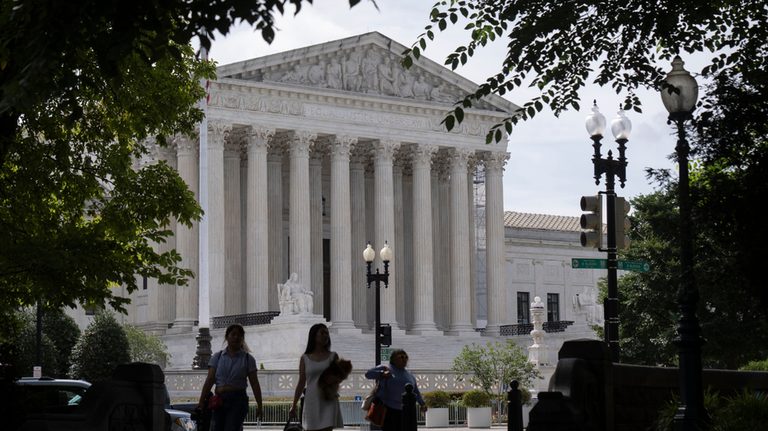
Montgomery County, Maryland – A group of parents has petitioned the United States Supreme Court to hear a case challenging the county’s magnet middle‑school admissions lottery. The lawsuit contends that the county’s policy, which requires students in certain school clusters to score in the 93rd percentile on a MAP test, discriminates against Asian‑American students by using race‑specific thresholds.
Background of the County’s Policy
In 2015, Montgomery County hired consultants to review the racial and socioeconomic composition of its gifted‑program schools. At that time, Asian‑American students comprised nearly half of the enrollment in the four magnet middle schools, which admitted students based on grades, a cognitive abilities test, and teacher recommendations. The consultants warned of “significant racial and socioeconomic disparities,” noting that Black and Hispanic students were under‑represented relative to the county’s overall demographics.
Following the report, the Board of Education approved changes that introduced “non‑cognitive criteria” and “group‑specific norms” into the selection process. The new system created a lottery that is not open to all applicants. To qualify, students must score in the 85th percentile on the Measures of Academic Progress (MAP) test, but the percentile is “locally normed,” meaning it is measured against peers in the same school cluster.
Under the revised rules, students in clusters with high Asian‑American enrollment must achieve a district‑wide 93rd percentile to be eligible for the lottery, while students in other clusters need only reach the 60th percentile. The result, according to the plaintiffs, is a sharp decline in Asian‑American participation—from 58.2% to 30.3% at one school since 2016.
Legal Challenge and Lower‑Court Rulings
The Pacific Legal Foundation filed the lawsuit on behalf of the parents, arguing that the Constitution protects each child as an individual, not as a statistical member of a racial group. The Fourth Circuit Court of Appeals, however, dismissed the case, stating that Asian‑American enrollment had not fallen below the share of applications, and therefore the alleged discrimination was not severe enough to merit judicial review.
Justice Samuel Alito, joined by Justice Clarence Thomas, warned in a dissent from the denial that the Fourth Circuit’s reasoning—suggesting that intentional racial discrimination is permissible so long as it is “not too severe”—is indefensible and demands correction.
Why the Supreme Court’s Review Matters
If the Supreme Court agrees to hear the case, it could overturn the Fourth Circuit precedent and reaffirm that the Constitution safeguards individual rights regardless of a group’s overall academic performance. The Court’s decision would have implications far beyond Montgomery County, potentially affecting how school districts nationwide design admissions policies that claim to be race‑neutral while effectively using race‑based criteria.
Supporters of the challenge argue that equality is not a numbers game; it is a birthright that should not hinge on how well a statistical group performs. Critics of the lawsuit claim the policy aims to address historic under‑representation of Black and Hispanic students and that the adjustments are a lawful effort to promote diversity.
What’s Next?
The Supreme Court has set an October 19 hearing date for the case, titled AFEF v. Montgomery County. The outcome will be closely watched by educators, parents, and civil‑rights advocates across the country.
For Montgomery County families, the case underscores the ongoing debate over how best to balance merit‑based admissions with efforts to ensure a diverse student body, while respecting the constitutional guarantee that each child’s rights are protected as an individual.
Original reporting: Fox News (HLL/CB) — read the source article.