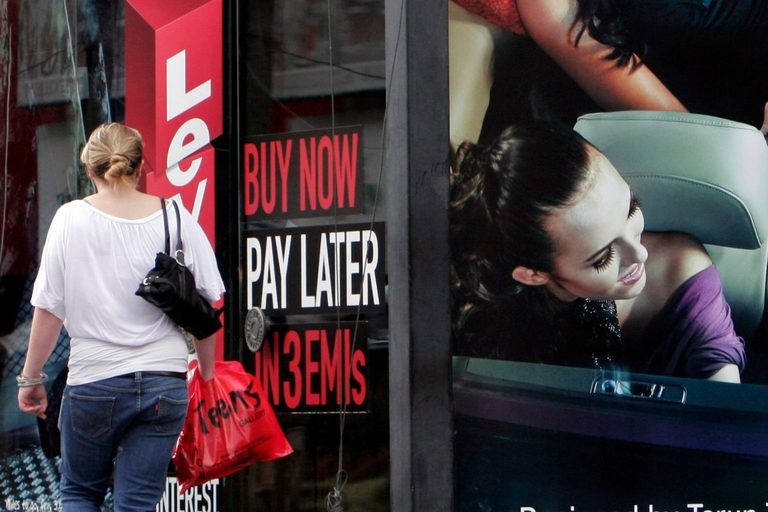
Americans are turning to buy‑now‑pay‑later (BNPL) financing at unprecedented levels. Federal Reserve economists report that total BNPL spending topped $160 billion in 2025, a figure that underscores how many households rely on these short‑term credit products for everyday expenses.
Growth of four‑installment plans
Pay‑in‑four plans, which spread a purchase across four payments over six weeks, accounted for roughly half of the total BNPL volume. Use of these plans has risen nearly 80 % since 2023, according to the study.
Why consumers are using BNPL
Credit‑card analyst Sara Rathner of NerdWallet says the surge reflects a “tough job market, a rough economy, and rising costs for everyday items that outpace many people’s incomes.” The products are being used for groceries, utility bills, transportation, and even rent.
Elizabeth Brown, 26, from Columbia, South Carolina, described how she first adopted BNPL when she moved out on her own. “I used buy now, pay later so I can have the furniture I need. I have groceries in my fridge because of it,” she said, adding that the service feels “beneficial” at this stage of her life.
Potential pitfalls
Financial‑services executive Mark Elliott of Happen Bank warns that BNPL is evolving from a convenience into a cash‑flow challenge for many users. “It isn’t really just a convenience element anymore; it really is becoming a cash‑flow challenge,” he explained.
Professor Ed deHaan of Stanford Graduate School of Business cautions shoppers to read contracts closely. “So‑called buy now, pay later products are popping up that are not good deals at all,” he said. “Some of them charge hefty fees, both upfront and if you miss a payment.”
Missing a payment can trigger fees, interest, or even a ban from the service. In the past, BNPL activity did not affect credit scores, but the Federal Reserve notes that many providers now report to the major credit bureaus—Equifax, Experian, and TransUnion. “Entering into a buy now, pay later plan isn’t going to affect your credit in any way, but missing a payment can, so that’s where you really want to be careful,” Rathner added.
Advice for responsible use
Experts recommend setting a clear budget before signing up. Brown limits her BNPL spending to $100 a month and prefers monthly payment options over bi‑weekly ones.
Carla Sanchez‑Adams, senior attorney at the National Consumer Law Center, urges consumers to avoid stacking multiple BNPL loans. “Avoid multiple purchases because then it gets really hard to track, especially if they’re with different companies,” she said.
Keeping a spreadsheet or calendar of due dates can help prevent late fees. If a household is struggling to afford basic needs, Rathner suggests exploring local assistance programs such as food banks, SNAP, or other hardship aid.
For those overwhelmed by multiple BNPL accounts and credit‑card debt, nonprofit credit‑counseling agencies like the National Foundation for Credit Counseling and the Financial Counseling Association of America can provide guidance.
Looking ahead
The Federal Reserve’s findings highlight a growing reliance on short‑term financing that could have broader implications for household debt levels. While BNPL can offer short‑term relief, experts stress the importance of disciplined budgeting and awareness of contract terms to avoid long‑term financial strain.
Original reporting: Alexandria, VA News – WTOP News — read the source article.