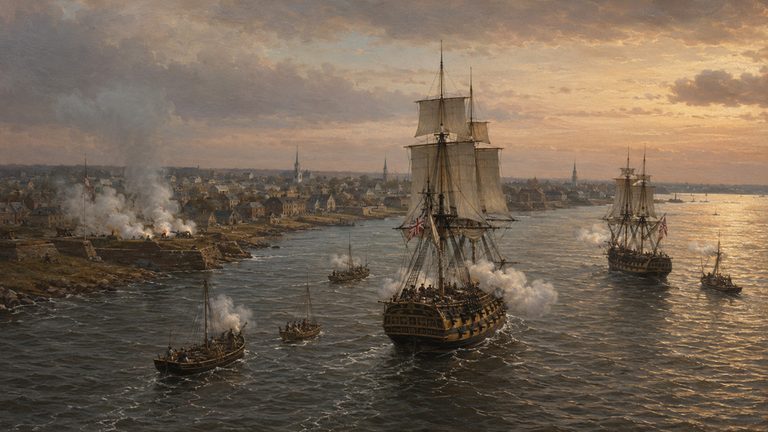
On July 12, 1776, two British warships and three tenders moved from the bay opposite Staten Island toward New York, catching a favorable breeze and tide. The ships, one carrying 40 guns and the other 20, ran past American batteries and up the North River, now known as the Hudson.
American Response
American guns opened fire, and the British ships returned fire as they moved up the river. Despite the heavy and incessant canonade, the British ships passed the American batteries without receiving any certain damage.
The event marked a significant moment in the fight for independence, as it demonstrated the strength of the British naval power and the challenges that the American forces would face in defending their newly declared independence.
Washington’s Leadership
George Washington, the commander-in-chief of the American forces, played a crucial role in responding to the British threat. He proposed a descent on Staten Island to form a general attack on the enemy’s quarters, but the plan was rejected by his generals.
Instead, Washington proposed a smaller partisan strike to alarm the enemy and encourage American troops. The council agreed to consider the plan, and Washington also requested that Congress ensure the Flying Camp had sufficient powder and ball to defend the new nation.
Original reporting: WBAP News/Talk (Dallas-Fort Worth) — read the source article.