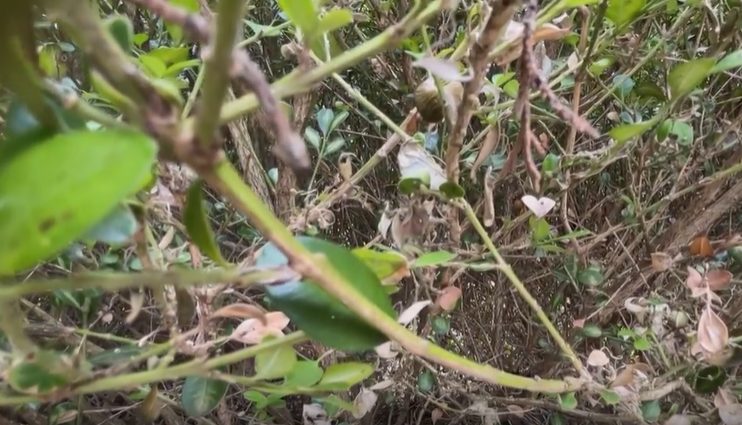
Residents of Anderson Township, a community on Cincinnati’s east side, are confronting a rapid loss of their boxwood shrubs. The invasive box tree moth, first reported in nearby Loveland last year, has moved into the township and is causing foliage to brown and die within days.
What homeowners are seeing
Boxwood, a staple shrub for many yards and landscaping projects, is turning from vibrant green to a mottled brown almost instantly. “Last week they were green and then they just had little bits of brown on them,” said homeowner Christina Witte. “And then it felt like overnight they turned, and they were almost all brown.”
How the damage occurs
The moth’s caterpillars feed on the leaves, creating tiny blisters that quickly expand into larger brown patches. Landscape manager Cody Douglass of Native Roots explained, “Early on, you might notice some blistering on the leaves, but then you’ll notice the leaves are actually browning and dying.” The stress from feeding can kill the shrub if the infestation is severe.
Options for treatment
Insecticides are available, but their effectiveness depends on the extent of the damage. If a shrub is already fully brown, experts suggest evaluating each plant individually to determine whether it can be salvaged. Homeowners unsure of the cause are encouraged to contact local nurseries for identification and advice.
What residents can do
Local nurseries are the first point of contact for verification and treatment recommendations. Residents are also advised to monitor new growth closely and act quickly at the first sign of leaf blistering. Early intervention can help preserve healthy boxwoods and prevent the moth from spreading further.
Community response
The rapid appearance of the moth has sparked frustration among gardeners and homeowners who value the aesthetic and privacy benefits of boxwood hedges. Community groups are sharing information on social media and coordinating with local horticultural experts to raise awareness and provide guidance.
While the box tree moth is an invasive species, there is no indication of a broader ecological threat beyond ornamental shrubs. Nonetheless, the situation underscores the importance of vigilance and prompt action when invasive pests appear in residential neighborhoods.
Original reporting: WLWT Cincinnati — read the source article.