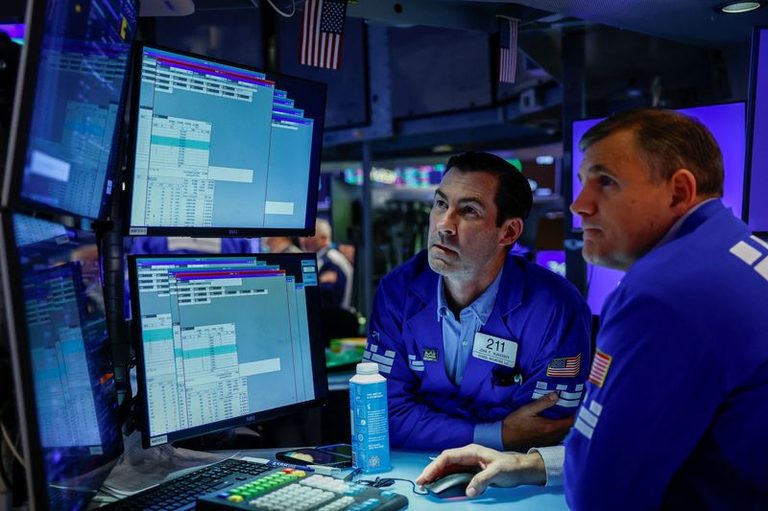
Investors faced another sharp decline in bond prices on Wednesday, with U.S. Treasury yields climbing to levels not seen in decades. The rally came after fresh data showed U.S. and European business activity accelerating at the fastest pace in years, while input prices continued to rise.
Fed officials signal more tightening
Centrist Federal Reserve board member Michael Barr told reporters that additional rate hikes will be necessary to keep inflation in check. Money‑market participants quickly priced in a two‑thirds chance of another Fed move as early as next month, and a similar probability for the European Central Bank in October.
Global ripple effects
The selloff spread worldwide. Japan’s 10‑year government bond yield hit its highest level in 30 years after the country returned from a three‑day holiday. In the United States, the 30‑year “long bond” rose to its highest yield in 22 years.
Warnings from the OECD about rising sovereign debt, along with the Institute of International Finance’s estimate that global government debt‑service costs now exceed $3.5 trillion—outpacing spending on defence, energy or artificial intelligence—further soured market sentiment.
Treasury buyback programme under pressure
Demand for the Treasury’s $70 billion sale of five‑year notes was weak, pushing those yields above 5 % for the first time since 2007. Some market participants view the Treasury’s buyback programme as an irritant rather than a soothing measure.
Oil, geopolitics and AI add to volatility
Oil prices surged back into triple‑digit territory after disappointment over the lack of progress in U.S.–Iran talks at the United Nations gathering. Rumors of a U.S. diesel‑export ban also lifted fuel prices abroad, though the White House later clarified those reports.
On the policy front, the upcoming summit in Washington between President Donald Trump and China’s President Xi Jinping is drawing attention. Observers note that the trade truce between the two nations may only be extended from November to January, creating uncertainty for businesses that rely on stable trade rules.
The leaders will also discuss artificial‑intelligence risks and possible controls. Recent reports of OpenAI hacking an Australian government website and the presence of AI executives at a UN meeting have intensified calls for tighter oversight. Both Washington and Beijing claim the other side is spreading conspiracy theories to hinder progress in the AI race.
SoftBank’s high‑yield bond sale
Japan’s SoftBank Group raised $11.1 billion in dollar‑ and euro‑denominated bonds, marking the largest high‑yield corporate bond issuance on record. The funds will support SoftBank’s large‑scale investment in OpenAI. However, the cost of insuring SoftBank’s debt has risen sharply, with five‑year credit‑default‑swap spreads climbing above 400 basis points from roughly 280 basis points in June, indicating heightened market sensitivity to the AI sector’s outlook.
What to watch
- Trump‑Xi summit in Washington
- U.S. weekly jobless claims and August new‑home sales
- U.S. 7‑year note auction
- Remarks from New York Fed President John Williams and other regional Fed presidents
As bond markets navigate these turbulent conditions, investors will be closely monitoring the Fed’s next move, the outcome of the Trump‑Xi talks, and the evolving regulatory landscape for artificial intelligence.
Original reporting: Appleton, WI News Feed (HLL/CB) — read the source article.