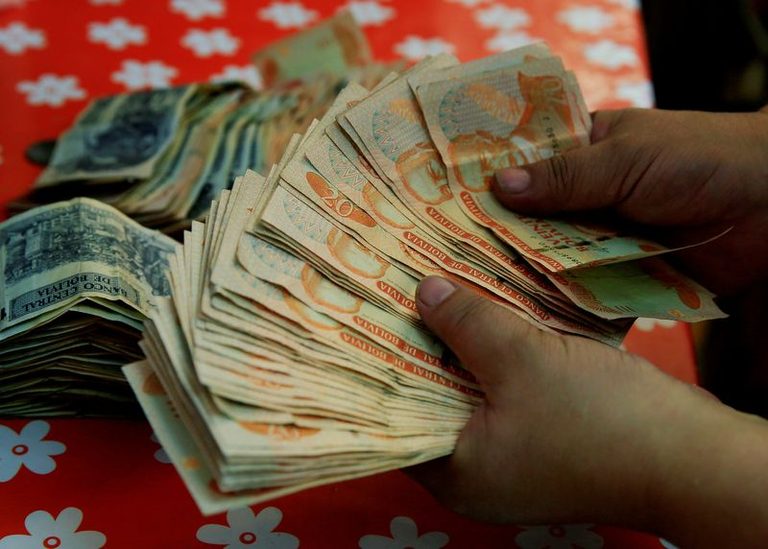
Bolivia will adopt a flexible exchange-rate system, the government said on Friday, effectively devaluing the currency by ending a 15-year dollar peg in a major policy shift aimed at restoring economic stability.
Economic Stability
Bolivia’s central bank will oversee the shift, as the government aims to “strengthen macroeconomic stability, preserve external competitiveness and contribute to the balance of payments equilibrium,” the economy ministry said in a decree.
The move is part of Bolivia’s broader effort to normalize currency markets and boost investor confidence as Bolivia negotiates a financing program worth at least $2.5 billion with the International Monetary Fund and grapples with severe scarcity of dollars.
Bolivia had kept its official exchange rate largely unchanged since 2011 at 6.86 bolivianos per dollar for purchases and 6.96 for sales. But falling foreign-exchange reserves and increasing dollar shortages fueled the emergence of a parallel market, with the dollar at times trading near 20 bolivianos.
More recently, the government has been using a reference rate of around 9.90 bolivianos per dollar, which accounts for most commercial and financial transactions.
Shortly after the decree, the central bank updated its website to show the official exchange rate at 9.73 bolivianos per dollar as of Monday, implying a loss of about 30% in the currency’s value from the previous buy rate.
Original reporting: Appleton, WI News Feed (HLL/CB) — read the source article.