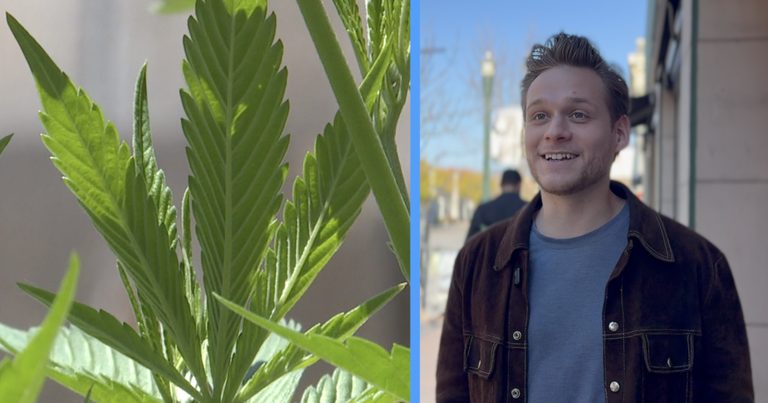
On Election Day, Idaho voters rejected House Joint Resolution 4, a constitutional amendment that would have given the state Legislature exclusive authority over any future legalization or decriminalization of marijuana and other psychoactive substances. By defeating the measure, Idaho’s citizen‑initiative process remains intact, allowing future proposals to be placed on the ballot if supporters gather enough signatures.
Local voices from downtown Boise
Idaho News 6 spoke with several Boise residents in the downtown area about the outcome. Dominic Boucher, a longtime Boise neighbor, said he voted “no” because he believes the people of Idaho should retain the power to decide. “Whether it’s to allow marijuana, decriminalize it, or whatever, that decision shouldn’t rest solely with the Legislature,” he explained.
Dave Ferguson, who has lived in Boise’s North End since 2009, echoed that sentiment. “I just think that people should make the decision versus our legislators being the only ones that can make a decision,” he said. Ferguson clarified that his stance was not an endorsement of full‑scale legalization, but a defense of the voter‑choice mechanism. “If it ever comes to that, it should be a people’s choice… because giving that power to elected officials concentrates too much authority in one hand,” he added.
Opposing view
Not all interviewees shared the same perspective. One Boise resident, who spoke off camera, voted in favor of HJR 4, arguing that elected representatives are better positioned to weigh the broader impacts of major policy changes. He also emphasized the importance of rural Idaho voices being represented through legislators who understand those communities.
Confusion over wording
Boucher noted that the ballot language was confusing. “I wasn’t sure whether to vote no or yes. Luckily there was a little section that described what a ‘yes’ vote meant, so that helped a bit. The wording was a bit strange,” he said.
Results across the state
When votes were tallied Tuesday night, HJR 4 failed in every Idaho county. Boucher said the outcome was unsurprising. “It’s a bunch of old, normally white people, sitting in a room making decisions for the rest of us. Their opinions often don’t reflect what the people have chosen,” he remarked.
With the amendment defeated, Idaho’s constitution remains unchanged, and the citizen‑initiative process continues to allow future marijuana‑related measures to qualify for the ballot, provided organizers meet signature requirements.
What’s next for Idaho voters?
Advocates for marijuana reform will now focus on gathering signatures for a new initiative that could appear on a future ballot. Opponents, meanwhile, are likely to continue pressing legislators to address drug policy through the traditional lawmaking process. The debate underscores a broader tension in Idaho politics between direct democracy and representative decision‑making.
Original reporting: KIVI Idaho News 6 Boise metro (local) — read the source article.