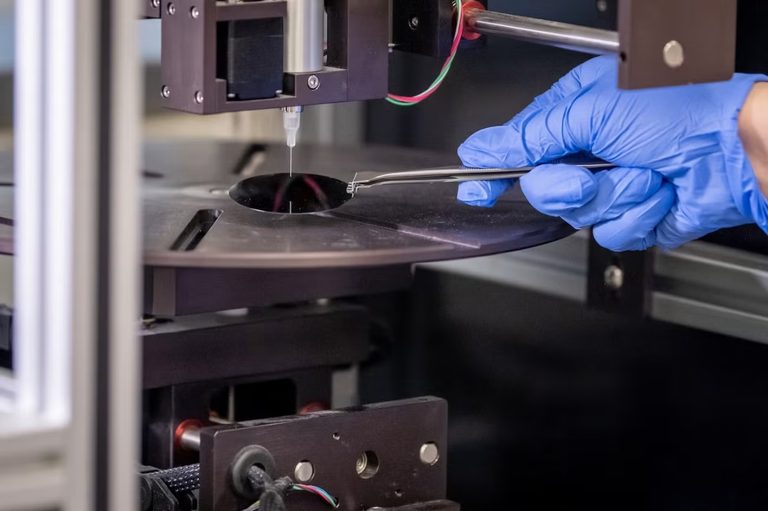
Boise State University is at the helm of a new statewide research effort funded by a federal grant of almost $8 million. The project, titled “Capacity Building for Resilient Microelectronics for Extreme Environments” (XTREME), aims to create microelectronics and sensors that can operate reliably in hostile conditions such as high‑temperature aerospace reactors, radiation‑intense defense systems and deep‑space missions.
Local universities and industry join forces
In addition to Boise State, five other Idaho institutions will participate: the University of Idaho, the College of Western Idaho, the College of Southern Idaho, the College of Eastern Idaho, and Brigham Young University‑Idaho. Micron Technology and the Idaho National Laboratory (INL) are also partners, bringing industry expertise and test facilities to the collaboration.
Student opportunities and research goals
Boise State President David Hahn highlighted the project’s benefit to students at all levels, noting that doctoral, master’s and undergraduate scholars will have roles in the research. “Professor David Estrada leads one of the largest student‑driven research groups on campus, and this grant expands those opportunities,” Hahn said.
Professor Estrada, the principal investigator, explained that the team will study how materials behave under temperatures exceeding 1,000 °C, intense radiation, and mechanical stress. The goal is to discover new materials that keep electronics functional in environments that currently limit performance.
Economic and strategic impact for Idaho
Hahn tied the grant to Idaho’s broader economic competitiveness. He said the funding helps bring high‑tech manufacturing back to the state, reducing reliance on overseas production. “The United States is catching up, and Boise State is well positioned to contribute at many levels,” he remarked.
The project builds on a 20‑year partnership between Boise State, the University of Idaho and the INL, as well as Micron’s recent $25 billion investment in microelectronics fabrication in Boise. A prior $25 million donation from the Micron Foundation established the Micron Center for Materials Research, providing a foundation for the new XTREME effort.
R‑1 research status and future outlook
Boise State is pursuing R‑1 research classification from the Carnegie Classification, a status that can attract top faculty, additional research dollars and elevate the university’s national profile. Hahn believes the university already meets R‑1 benchmarks and expects formal recognition in 2028. The four‑year XTREME grant will help sustain that momentum beyond the designation update.
Overall, the XTREME project positions Idaho as a leader in resilient microelectronics, with potential benefits for aerospace, energy and defense sectors nationwide.
Original reporting: Idaho Education News — read the source article.