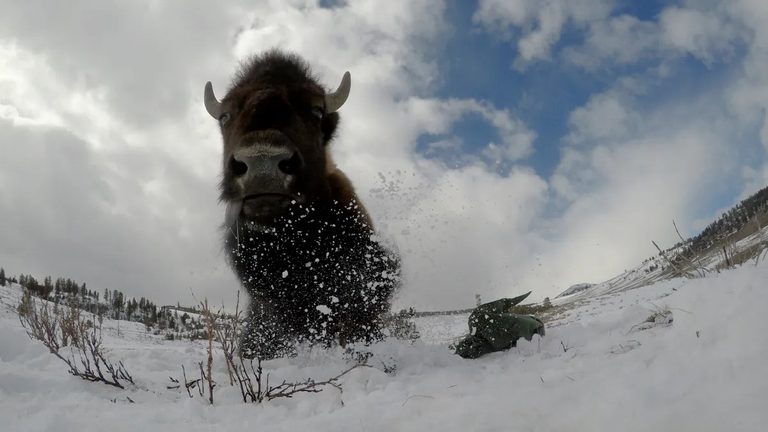
Wyoming’s own Wyoming Migration Initiative has produced a groundbreaking documentary that places viewers directly in the world of the continent’s largest land mammals. For almost twelve months, a small group of bison wore lightweight cameras around their necks, capturing intimate footage of daily life, seasonal migrations, and the surprising ways these animals shape the Yellowstone ecosystem.
From Riverbanks to Snowfields
The film, titled What Bison See: Restoring Yellowstone’s Lost Migrations, opens with striking scenes of a shaggy‑bearded bison calf basking in the sun, a herd wading belly‑deep in a river, and a thunderous sprint across a snow‑covered meadow. Unlike traditional wildlife footage taken from a distance, this material was recorded from the animal’s own perspective, allowing viewers to experience the world as a bison does.
Scientific Insight and Historical Context
Producer and co‑director Pat Rodgers explains, “We got to see something no one has ever seen. You can get close to bison from a vehicle, but you can’t follow them all day and live in their world.” The documentary also weaves in research from University of Wyoming scientists Janey Fugate, Jerod Merkle, and Yellowstone biologist Chris Geremia. Their work shows how bison migrations, first re‑established after near‑extermination, follow a learned pattern: groups stay put until numbers swell and snow deepens, then they move to greener pastures, creating annual migration routes that are passed down through generations.
Geremia notes that these routes often appear as “interstates”—paths up to twenty animals wide that are visible from space. The bison’s grazing also fertilizes the soil; their dung stabilizes carbon and accelerates nitrogen cycling, effectively farming the landscape and boosting grass nutrition for all herbivores.
Public Exhibition and Educational Goals
Starting this fall, the film will run for three years in the Smithsonian’s National Museum of Natural History as part of the Bison: Standing Strong exhibit, and it will also be shown at two Yellowstone visitor centers. The aim is simple: by letting the public see how bison live, raise calves, and transform the land, the documentary hopes to shift hearts and minds toward greater support for bison restoration.
Challenges Ahead
Despite the hopeful message, the film does not shy away from ongoing conflicts. Montana officials have repeatedly sued Yellowstone, demanding reduced bison numbers and stricter barriers to keep the animals from leaving the park. Concerns center on brucellosis—a disease that can cause cattle to abort unborn calves—though wild bison have never been confirmed to transmit it to livestock.
Conversely, many tribal nations, such as the Wind River Reservation, welcome the opportunity to host quarantined bison, seeing them as a cultural and ecological treasure. Tribal buffalo coordinator Jason Baldes emphasizes the need for larger, connected habitats to fully restore this keystone species.
Why It Matters to Wyoming Residents
For Wyoming families, hunters, and outdoor enthusiasts, the documentary underscores the deep ties between the state’s natural heritage and its future. By highlighting the bison’s role in sustaining healthy rangelands, the film reinforces the importance of responsible wildlife management that respects both private landowners and the nation’s iconic wildlife.
Whether you’re a conservationist, a rancher, or simply a lover of the great outdoors, the new documentary offers a rare, up‑close view of the animals that have roamed these plains for centuries—and a reminder that preserving them benefits all who call Wyoming home.
Original reporting: Oil City News (Casper WY) — read the source article.