A number of small flying creatures had their breakfast temporarily interrupted on a recent morning at Edness K. Wilkins State Park, but it was all for a good cause. For more than a decade, Audubon Rockies has been organizing morning bird banding events at the park as part of the Monitoring Avian Productivity and Survivorship (MAPS) program.
MAPS Program
The MAPS initiative is done nationally, and all of the data is uploaded into a centralized location for study. The MAPS monitoring happens during breeding season throughout the summer. Small nets are placed in strategic areas around the park before sunrise to capture birds in flight as they chase insects for breakfast.
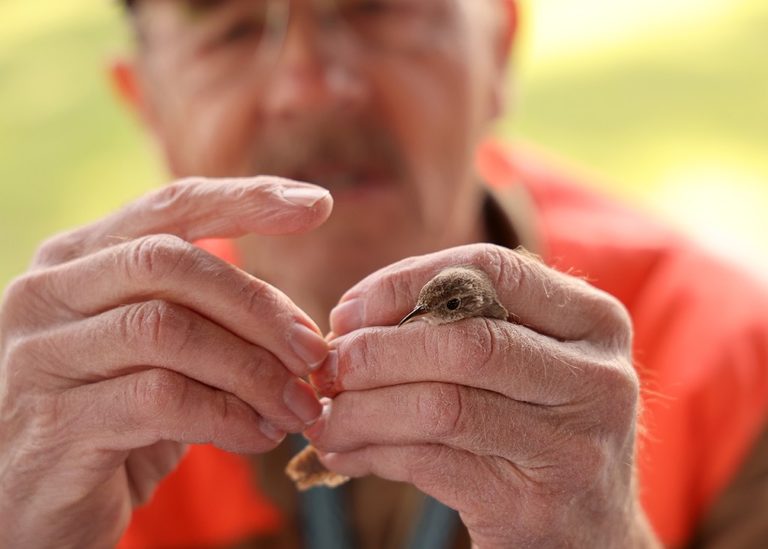
Leading a group of volunteer birding enthusiasts, Audubon Rockies Community Science Coordinator Zach Hutchinson walks them through the delicate process of retrieving the bird from the net, gently placing it into a specialized bag, and examining and recording its data before setting it free.
It’s close to 40 species that we regularly capture in the state park, but our most common species are the birds a lot of people know, like the American Robin, said Hutchinson. Northern house wrens and northern yellow warblers are also common. We catch common grackles, and that was one of the first birds we had this morning, and we capture some really fun and interesting birds, like orioles and hybrid orioles, that is two different species that [had bred].
Changes in Bird Populations
Even in just a decade of monitoring, Hutchinson said they have seen notable changes in some species as they apparently adjust to a warming climate. Our house wren population is shrinking in mass, and they’ve shrunk over the past 11 years we’ve been doing this by 30% in body mass, he said.
Why? I’m guessing one of two things are happening. Either individuals who are smaller are responding to warmer average summer temps by the genes of the birds that are smaller being passed on because they’re more productive, or we’re seeing a shift in populations where more southern birds that tend to be smaller are actually moving north, and the birds that used to breed here are moving even more north where organisms tend to be larger.
Specialized researchers will work on answering those questions using the data that is collected regionally in the MAPS efforts, he said.
The banding efforts are open to volunteers or for people who simply want to watch and learn about birds in their area. It takes a little bit to learn the full process, it’s not a come out and immediately get to jump right in because there are ethical and safety standards we have to follow, said Hutchinson.
Banding events are regularly posted on the Murie Audubon Society’s website, and the Audubon Rockies website. The next banding at EKW is scheduled for Tuesday, July 28, starting at 5:30 a.m.
Original reporting: Oil City News (Casper WY) — read the source article.