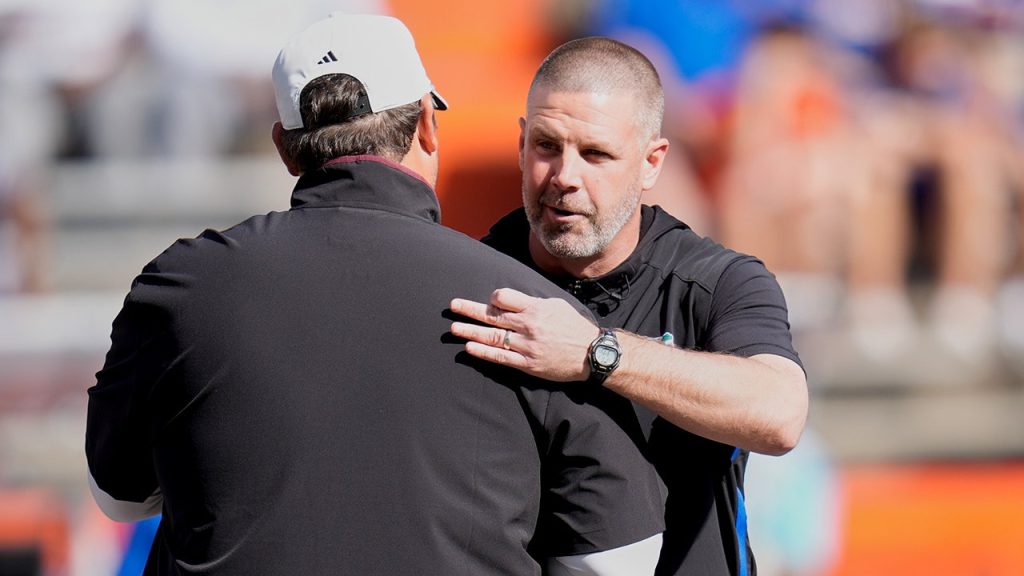
Billy Napier’s move from the University of Florida to James Madison has stirred a lot of reactions, touching on his comments about program culture, his time in Gainesville, and how Florida fans remember his results. This piece looks at Napier’s public remarks, the pushback from Gator supporters, specific criticisms about on-field execution, and where his tenure ranks among recent Florida coaches.
Napier has been talking up his new role at James Madison, noting the program’s setup and how it felt farther along than he expected. His praise for what he found there has been read by some listeners as a gentle dig at past stops, and that reading hasn’t gone unnoticed back in Gainesville. When coaches move on and sing the virtues of their new digs, listeners often read between the lines and Gator fans have done just that.
At a recent stop on his speaking tour Napier said, “I think typically, when you get one of these types of jobs, it’s broken. There’s lots of things to fix. You’ve got a long list of problems you have to solve,” Napier said. “I think here we are starting on second base a little bit.” Those exact words landed like a throwaway assessment to some, and to others they felt like a swipe at the work he left behind.
Context matters. Napier came to Florida after previous head-coaching jobs and took over a program with high expectations in a state loaded with talent. Fans and observers point out that the Gators are not a program that normally merits the label “broken” given their recruiting resources and recent history of winning seasons. That contrast is central to why many former supporters bristled when Napier framed his new job as notably advantaged.
Criticism of Napier has focused less on facilities and more on what happened on game days. Florida’s offensive struggles under his watch and regular special teams miscues became recurring storylines that supporters noticed with frustration. Those are concrete, in-game issues that don’t map cleanly to infrastructure or culture alone, and critics argue those problems fell squarely into the coach’s lane of responsibility.
Gator fans and local observers also recall that the three coaches who preceded Napier at Florida all posted records above .500 and claimed at least a share of the SEC East during their tenures. That historical context feeds the perception that Napier’s results did not measure up to recent standards and makes his comments about “starting on second base” feel tone-deaf to a portion of the program’s base. Accountability, for many, is about wins and execution as much as facilities.
There’s a line between offering modesty and laying blame. To some listeners Napier’s remarks read as an attempt to deflect responsibility, putting problems on prior leadership or program alignment rather than on in-game decision-making and coaching. Whether intentional or not, that defensive posture has kept the story alive on message boards and in local conversations where Gator supporters trade takes and tally memorable mistakes.
Coaching transitions always produce talking points, and Napier’s tours are no different. His praise for James Madison’s culture and setup is sincere to many observers, but the timing and contrast with his Florida tenure left former fans feeling shortchanged. The debate now is less about where he landed and more about how coaches account for results when the spotlight follows them from one program to another.