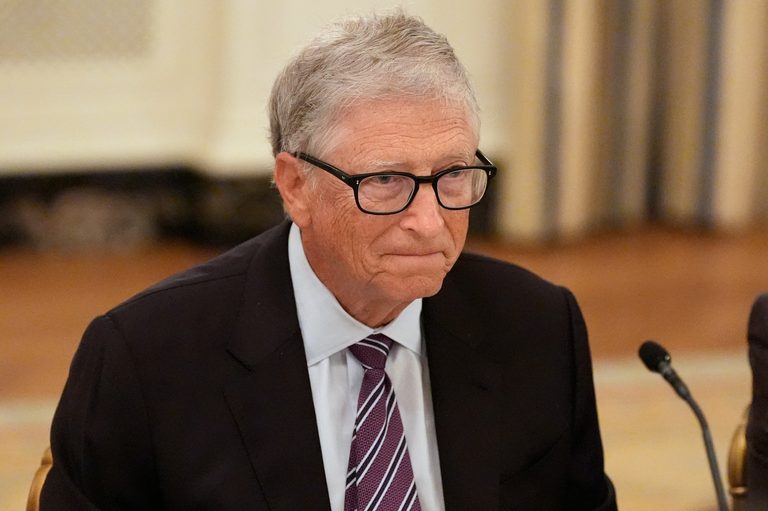
During the Bill & Melinda Gates Foundation’s Goalkeepers gathering at Jazz at Lincoln Center in New York, the foundation’s chair, Bill Gates, urged the world’s richest nations to boost international aid and apply artificial intelligence (AI) to what he called “lifesaving innovations.” Gates warned that the failure to embed human values in AI could hinder progress against global inequality.
AI and aid: a combined strategy
Gates highlighted that 26 of the 34 wealthiest countries reduced development assistance last year, even as the United Nations warned that progress toward its Sustainable Development Goals remains “slow and uneven.” He argued that “increased generosity” paired with “the smart use of AI” could accelerate efforts to lift people out of poverty, improve health outcomes, and protect the environment.
New coalition to expand language coverage
The foundation announced a new coalition of 60 organizations—including Anthropic, Google, the OpenAI Foundation, and dozens of other firms, nonprofits, and academic groups—dedicated to making AI more accessible in under‑represented languages. The partnership aims to reach more than 3 billion people over the next five years by coordinating existing language‑data projects and filling gaps where AI tools currently lack coverage.
Mark Suzman, CEO of the Gates Foundation, said the work must continue “full speed ahead,” even as some leading AI companies call for a slowdown in the development of advanced models. He emphasized that governments should regulate AI’s impact on cybersecurity and children’s development while still expanding its humanitarian applications for communities that are currently “shut out” of the technology.
Practical applications and examples
At the event, the foundation showcased educators, farmers, and health workers using AI to identify learning gaps, combat pest infestations, and improve medical record retrieval. Suzman noted that even if AI development were paused—a scenario he does not support—efforts to build language datasets and make them usable with existing tools should continue.
The coalition’s recent Goalkeepers report pledged $1 billion toward AI‑focused projects in health, education, and agriculture. It warned that unrepresentative language data can cause dangerous mistranslations, such as a pregnant woman in Malawi mistakenly being told her “water has broken” when she meant something else.
Industry voices on data diversity
E.M. Lewis‑Jong, CEO of the Mozilla Data Collective, described the internet as “not a representative space,” arguing that AI trained primarily on platforms like Reddit cannot produce culturally diverse outcomes. Her organization aims to let communities upload linguistic data on their own terms, rather than having it scraped without consent.
Google’s senior vice president, James Manyika, outlined the company’s Project Vaani, which seeks to collect more than 150,000 hours of audio across every district in India to capture dialectal variation. Anthropic’s head of beneficial deployments, Elizabeth Kelly, acknowledged that the company’s models still lag in many African languages, underscoring the coalition’s need for broader language coverage.
Governance and next steps
Details of the coalition’s governance are still being finalized. A secretariat will track each signatory’s commitments, and the Gates Foundation may encourage partners to address larger gaps as they arise.
By uniting AI developers, philanthropies, and language‑data specialists, the coalition hopes to ensure that AI’s benefits reach the world’s most vulnerable populations, aligning cutting‑edge technology with the moral imperative to reduce global inequality.
Original reporting: Dallas TX News (HLL/CB) — read the source article.